
Electrify America Is Redefining What an EV Charging Station Can Be
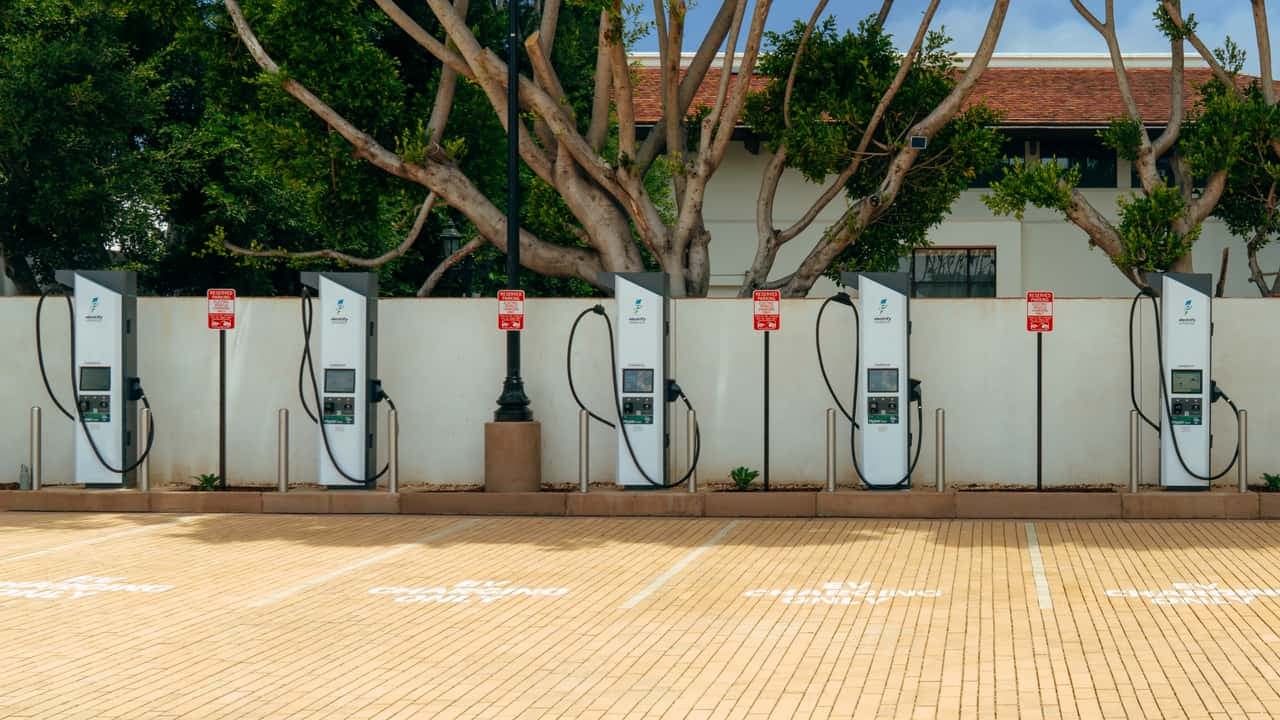
The electric vehicle revolution is accelerating, and the infrastructure supporting it is evolving just as rapidly. Electrify America, one of the United States' most prominent public EV charging networks, has unveiled its newest generation of large-format charging stations — and they represent a significant leap forward in terms of scale, performance, and energy resilience. The centerpiece of this upgrade? A massive battery energy storage system (BESS) that backs the entire operation, making these stations smarter, more powerful, and more reliable than anything the company has deployed before.
Located in California, the new station signals a turning point not just for Electrify America, but for the broader EV charging industry. As more drivers make the switch to electric vehicles, the pressure on public charging infrastructure has never been greater — and solutions like this are precisely what the market has been waiting for.
What Makes This New Station Different?
At first glance, a larger charging station might seem like a straightforward expansion. But the engineering behind Electrify America's latest installation goes far deeper than simply adding more stalls or plugs. This is a fundamentally reimagined approach to how public EV charging stations are designed, powered, and managed.
A Large-Format Footprint Built for Demand
The new station is Electrify America's largest yet, offering more charging stalls than a typical installation. This large-format design is a direct response to growing demand. As EV adoption climbs steadily across the United States — particularly in California, which leads the nation in electric vehicle registrations — charging bottlenecks at popular stations have become a real pain point for drivers. More stalls mean shorter queues, less waiting, and a significantly improved user experience that could help convert hesitant drivers to EVs.
Beyond raw numbers, the layout and hardware at these stations are designed for efficiency. High-powered DC fast chargers allow compatible vehicles to add substantial range in a matter of minutes, not hours, making long-distance EV travel far more practical for everyday Americans.
Battery Energy Storage: The Game-Changer
Perhaps the most forward-thinking element of this new installation is its battery energy storage system. Rather than drawing all power directly and instantaneously from the local utility grid, the station uses a large onsite battery bank to store energy and deploy it as needed. This approach delivers several critical advantages.
- Grid Demand Management: High-powered EV charging stations can place enormous instantaneous loads on the electrical grid. A BESS allows the station to draw power more gradually and store it, releasing it in bursts when multiple vehicles charge simultaneously. This reduces peak demand charges, which can otherwise make operating large charging hubs prohibitively expensive.
- Resilience and Reliability: In California, where grid reliability can be strained during heat waves, wildfires, or periods of extremely high energy demand, having an onsite battery buffer means the station can continue operating — or at least maintain partial service — even when grid supply is constrained.
- Renewable Energy Integration: Battery storage is a natural partner for solar energy. While Electrify America has not always paired every station with solar panels, the BESS infrastructure makes it far easier to integrate renewable energy sources down the line, supporting a greener charging ecosystem overall.
- Cost Efficiency: By charging the battery during off-peak hours when electricity is cheaper, and discharging it during peak demand periods, operators can significantly reduce electricity costs — savings that can ultimately be passed on to EV drivers in the form of more competitive charging rates.
Why California Is the Right Place to Start
California is not just the largest EV market in the United States — it is one of the most demanding environments for grid-connected infrastructure. The state regularly faces extreme heat events that strain the grid, rolling blackouts, and an aggressive policy agenda that pushes for complete decarbonization of transportation by 2035. Deploying a battery-backed, large-format charging hub in this context is both a practical necessity and a strategic statement.
California's grid is also increasingly powered by renewable energy, meaning the electricity stored in Electrify America's new BESS is often greener than what's available in most other states. Charging your EV in California is already among the most environmentally responsible ways to power personal transportation anywhere in the world — and stations like this one make it even more so.
The Bigger Picture: Where EV Charging Infrastructure Is Headed
Electrify America's next-generation station is not an isolated experiment. It is a preview of where the entire public EV charging industry is heading. Across the country, charging networks are racing to build out infrastructure that can keep pace with rapidly rising EV ownership rates. The federal government has committed billions of dollars through the National Electric Vehicle Infrastructure (NEVI) program to help fund this buildout, and private companies like Electrify America are supplementing that investment with their own capital and innovation.
The integration of battery storage at charging hubs is widely expected to become standard practice within the next several years. As the cost of battery technology continues to fall — a trend that has been consistent for over a decade — the economics of BESS-backed charging stations become increasingly compelling for operators across the country.
What This Means for EV Drivers
For the average electric vehicle owner, the immediate takeaway is simple: public charging is getting meaningfully better. Stations are growing larger, wait times are shrinking, charging speeds are increasing, and the underlying infrastructure is becoming more robust. The anxiety that once surrounded long-distance EV travel — commonly known as "range anxiety" — is gradually being replaced by something far more positive: confidence.
Electrify America's battery-backed, large-format station in California is a concrete example of the industry putting that confidence on solid footing. As more of these next-generation hubs come online across the country, the argument for switching to an electric vehicle becomes harder and harder to dismiss.
The future of EV charging is not just bigger — it is smarter, greener, and more resilient. And with installations like this one leading the way, that future is arriving faster than many expected.