
That Chirping Under Your Hood Isn't Your Imagination
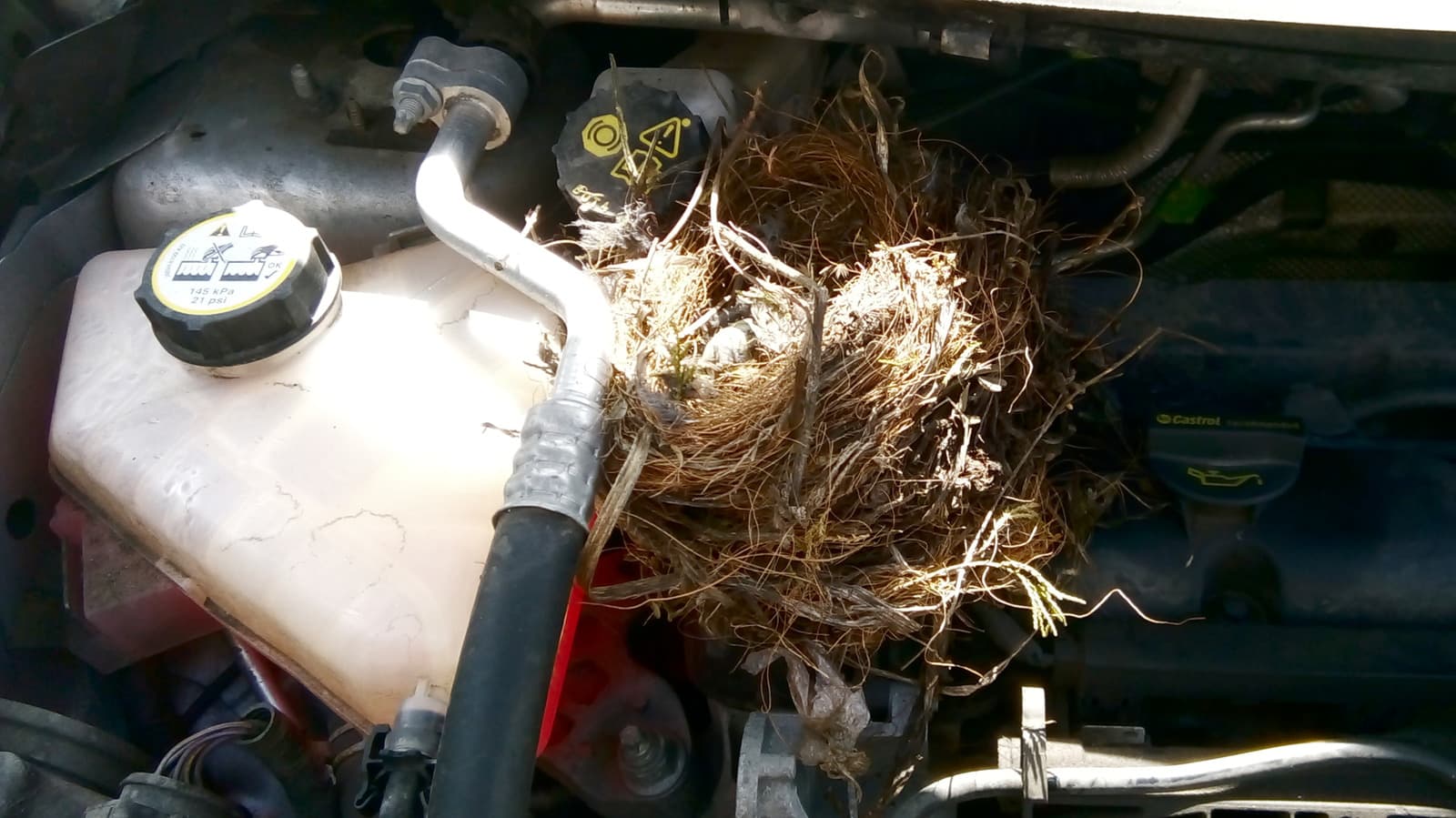
You walk out to your car on a quiet morning, pop the hood to check the oil, and suddenly come face to face with a neatly woven nest tucked between the engine block and the air filter housing. Or maybe you haven't seen anything yet — you've just been hearing faint chirping every time you park in the same spot. Either way, if you suspect a bird nest in your car, you're dealing with a situation that goes far beyond a minor inconvenience. Left unaddressed, it can lead to serious mechanical damage, fire hazards, and even legal complications depending on the species involved.
This guide walks you through everything you need to know: why birds choose cars in the first place, what risks a nest actually poses, how to remove one safely and legally, and what you can do to make sure it never happens again.
Why Do Birds Nest in Cars?
It might seem strange that a bird would choose a hot, noisy machine as a home for its eggs, but from the bird's perspective, a parked car offers a surprisingly ideal nesting environment. Vehicles that sit unused for several days at a time — such as a weekend car, a work truck left in a lot, or a vehicle parked under a tree — are prime targets. The engine cavity provides warmth, shelter from wind and rain, and protection from ground-based predators.
Birds are also creatures of habit. If a car stays in the same spot for even a few days during nesting season (typically spring through early summer), a bird may interpret that consistency as a signal that the space is stable and safe. Small openings around the wheel wells, air intake vents, and gaps beneath the hood provide easy access without the bird ever having to force its way in.
Common culprits include sparrows, starlings, and wrens — small birds that are comfortable nesting in tight, enclosed spaces close to human activity.
Why a Bird Nest in Your Car Is a Serious Problem
Many drivers who discover a nest assume they can simply brush it aside and drive on. Unfortunately, that assumption can be costly — and even dangerous. Here's why you should take the situation seriously from the moment you discover it.
Fire Risk
Bird nests are constructed from dry grass, twigs, leaves, lint, and other highly flammable materials. When these materials come into contact with a hot engine or exhaust components, they can ignite. Engine fires caused by nesting debris are not unheard of, and they can escalate quickly. This alone makes prompt removal a priority.
Electrical Damage
Modern vehicles are threaded with wiring harnesses throughout the engine bay. Nesting birds — and especially the rodents that sometimes follow them — have a habit of chewing through insulation and wiring. Even without chewing, the physical pressure and moisture from a nest can degrade wire connections over time, leading to misfires, sensor failures, and expensive electrical repairs.
Blocked Air Intakes
If a nest is built near or inside the air intake system, it can restrict airflow to the engine. This leads to reduced performance, poor fuel efficiency, and in severe cases, engine damage from running lean. A clogged cabin air filter caused by nesting material can also affect your HVAC system and air quality inside the vehicle.
Health Hazards
Bird nests can harbor mites, ticks, bacteria, and fungal spores. When you start the car, the ventilation system can draw these contaminants into the cabin air. Anyone with allergies or respiratory conditions is particularly vulnerable to this kind of exposure.
How To Safely Remove a Bird Nest From Your Car
Before you do anything, check whether the nest is active — meaning it contains eggs or live hatchlings. This matters both ethically and legally.
Check for Protected Species
In the United States, the Migratory Bird Treaty Act makes it illegal to destroy the active nest of a migratory bird species. Many common songbirds fall under this protection. If you find eggs or young birds in the nest, your safest course of action is to contact a local wildlife rehabilitator or animal control service. They can advise you on the correct legal steps and, in some cases, assist with the relocation process.
If the Nest Is Empty
An empty, inactive nest can be removed by hand or with gloves. Follow these steps to do it safely and thoroughly.
- Put on disposable gloves and a dust mask before touching anything. The nest may contain parasites, bacteria, or dried fecal matter.
- Carefully remove the nest and place it directly into a sealed plastic bag before disposing of it in an outdoor trash bin.
- Inspect the surrounding area thoroughly. Look for any nesting material that may have worked its way into air ducts, behind panels, or around wiring. Use a flashlight and remove every trace of debris.
- Clean the affected area with a mild disinfectant spray safe for engine bays. Wipe down any surfaces that were in contact with the nest.
- Inspect wiring and hoses for signs of chewing or damage. If you see frayed wires or bite marks, have the vehicle inspected by a mechanic before driving it extensively.
How To Prevent Birds From Nesting in Your Car Again
Once you've dealt with the immediate problem, prevention is your best long-term strategy. A few simple habits and inexpensive deterrents can make your car a far less attractive nesting site.
- Move your car regularly. Even shifting it a few feet every couple of days signals to birds that the space isn't stable enough for nesting. A car that never moves is an open invitation.
- Use a car cover. A fitted car cover eliminates most of the access points birds use to enter the wheel wells and hood gaps. It also makes the overall structure less inviting.
- Install mesh or wire screens over accessible openings such as the air intake grille or large gaps near the engine bay. Use materials rated for engine temperatures.
- Apply bird repellent tape or decoys near your regular parking spot. Reflective tape, predator decoys like plastic owls, and motion-activated deterrents can discourage birds from approaching the vehicle in the first place.
- Avoid parking under trees during nesting season. Trees offer ideal perching positions for birds scouting potential nesting sites, and their proximity to your vehicle greatly increases the chance of an unwanted visitor.
The Bottom Line
A bird nest in your car is one of those problems that seems minor until it isn't. What starts as a charming surprise can quickly turn into a fire hazard, a mechanical nightmare, or a legal headache if you handle it the wrong way. The key is to act quickly, act carefully, and make sure you understand the legal landscape before removing any active nest.
Take the time to fully inspect your engine bay, clean up thoroughly, and put a few preventive measures in place going forward. Your car — and your wallet — will be much better off for it.