
The Underdog Motorsport Dream Nobody Talks About
When most people fantasize about being part of a 24-hour endurance race, they picture themselves behind the wheel — hands gripping a carbon-fiber steering wheel, helmet on, foot planted hard on the throttle through some legendary corner at Le Mans or Daytona. That is a perfectly reasonable dream. It is also wildly unattainable for most of us. But here is the thing: there is another role in endurance racing that almost nobody talks about, one that blends genuine athleticism, split-second timing, and an almost cinematic level of dramatic tension. That role is the window person — and I am here to make my formal pitch for the job.
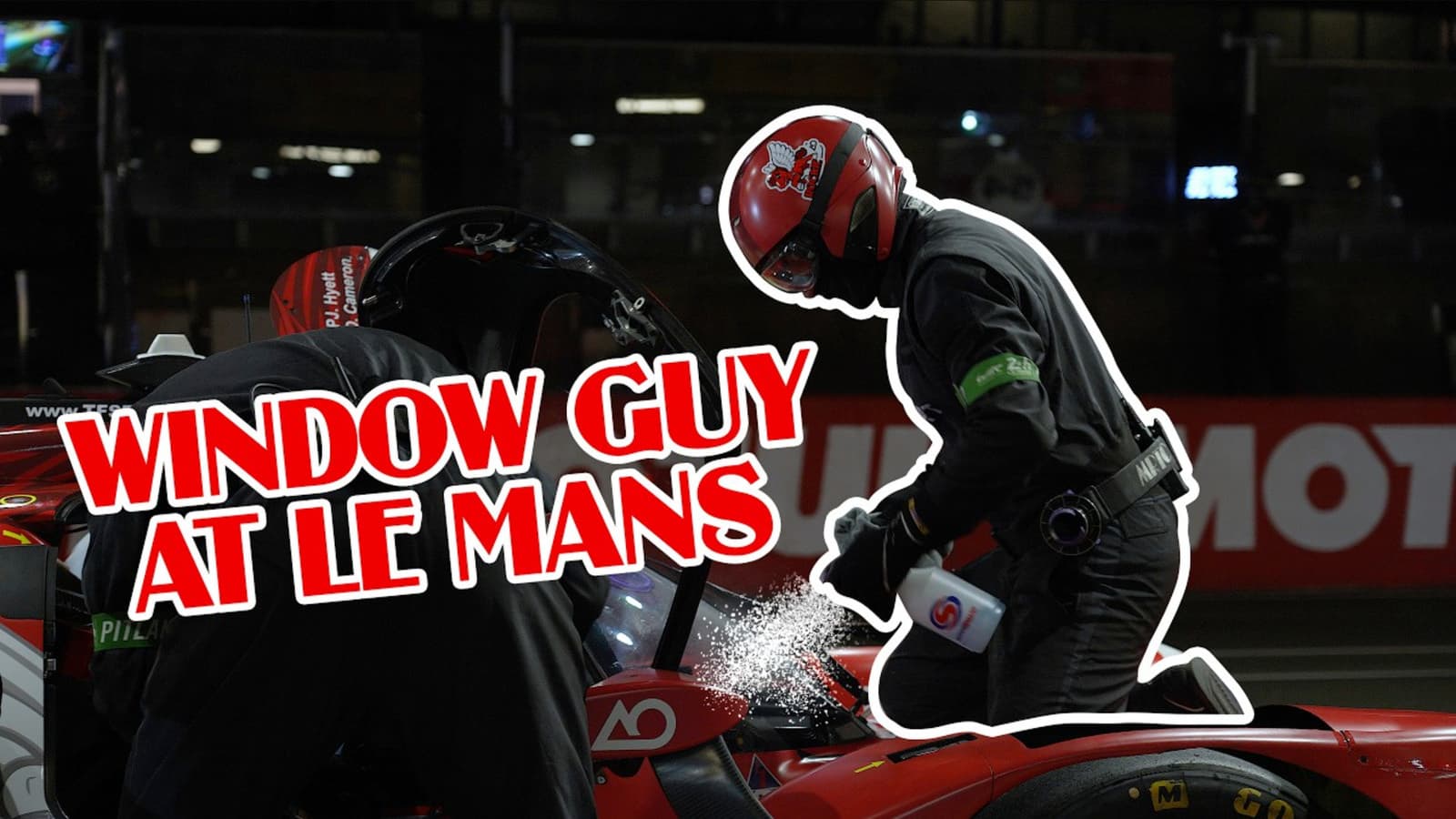
What Exactly Does a Window Person Do at a 24-Hour Race?
Before you dismiss this as a minor supporting act, let us get one thing very clear: the window person at an endurance race is not someone standing around holding a clipboard. This is a critical pit crew position that requires physical conditioning, precise coordination, and nerves of steel — all performed under the blazing lights of a race that never stops, not even at 3 a.m.
The window person's primary responsibility is to handle the driver change during pit stops. In a 24-hour race, multiple drivers share a single car, rotating in and out every few hours. When the car screams into the pit lane, the outgoing driver needs to get out and the incoming driver needs to get in — fast. The window person facilitates this transition. They open the door or window net, help extract the exhausted driver, assist the fresh driver in getting seated correctly, secure the window net or door, and confirm the car is ready to go. Every second counts. A fumbled buckle or a slow net latch can cost a team a podium position.
Beyond driver changes, the window person may also hand food, drinks, or a fresh radio to the driver during brief stops where the engine never fully quiets. They are a human relay station between the team and the cockpit, and they need to execute their tasks cleanly every single time.
Why This Role Deserves Far More Respect
Endurance racing crews are filled with specialists — tire changers, fuelers, jacks operators — and each of them trains obsessively for their narrow slice of the pit stop. The window person is no different. Yet somehow, outside of hardcore motorsport circles, this role flies almost completely under the radar.
Consider the physical demands alone. Pit crews in top-level endurance racing practice their stops hundreds of times before a major event. The movements need to be muscle memory. Reaching into a hot cockpit, unclipping a HANS device tether, pulling a tired driver free, guiding a fresh one into position — all of this happens in a matter of seconds, often in the dark, often in the rain, often with an entire race hanging in the balance.
There is also an emotional intelligence component that rarely gets discussed. Drivers climbing out after a stint are sometimes frustrated, exhausted, or running on pure adrenaline. Drivers climbing in are amped up and hyperfocused. The window person has to be a calm, steady presence in the middle of all that chaos. That is a skill. That takes training.
The Training Plan: My Personal Rocky Moment
So what would it actually take to prepare for this role? Here is where the underdog narrative really kicks in. Think of it as a motorsport Rocky montage, except instead of a Philadelphia waterfront, you are running sprints in a parking lot wearing fireproof gloves.
- Cardiovascular endurance: A 24-hour race means a pit crew that is on call through the night and into the next day. Staying sharp and physically capable after hour 18 requires genuine aerobic fitness. Daily running and interval training are non-negotiable.
- Upper body strength and grip: Extracting a driver from a race seat is not a gentle maneuver. Core strength, arm strength, and grip strength all matter. Regular weight training with a focus on functional, pulling movements builds the right muscle groups.
- Reaction time drills: The car arrives and you move — there is no easing into it. Reaction training, practiced through drills that simulate the sudden arrival of a vehicle, sharpens the mental trigger needed to perform instantly.
- Harness and equipment familiarity: Every race car has different buckle systems, window net mechanisms, and cockpit configurations. Spending serious hours with actual hardware — the kind used in real GT or prototype cars — is essential preparation.
- Night shift conditioning: Practicing pit stop procedures at 2 a.m. and 4 a.m. sounds absurd until you realize that is exactly when the race is still running and the team still needs perfection.
Why I Am the Right Person for This Role
The beauty of the window person position is that it does not require you to have grown up karting or to have a racing license. What it requires is commitment, physical preparation, coachability, and the ability to stay calm when everything around you is loud, fast, and high-stakes. Those are trainable qualities. They are also qualities that an enthusiastic, motivated outsider can develop with the right program and the right team willing to take a chance.
Motorsport has always been about finding the edge — the marginal gain that separates a winner from the rest of the field. A window person who has genuinely trained, who has studied the craft, who has internalized the movements and the timing, is not a liability. They are an asset. And honestly, there is something inspiring about a non-traditional candidate throwing themselves into the physical and technical preparation required to earn a spot on a real endurance racing crew.
The Bigger Picture: Endurance Racing Needs More Stories Like This
The 24-hour race format is one of the most compelling spectacles in all of motorsport precisely because it is human. Drivers get tired. Strategies evolve. Weather changes everything. Cars break down and get fixed at midnight by people running on coffee and adrenaline. The window person is part of that story — a vital, physical, emotionally demanding part of it.
If you are a team looking for a window person for your next endurance event, consider this the formal application. The training has begun. The gloves are on. The 800-word pitch has been written. All that is left is the race.