
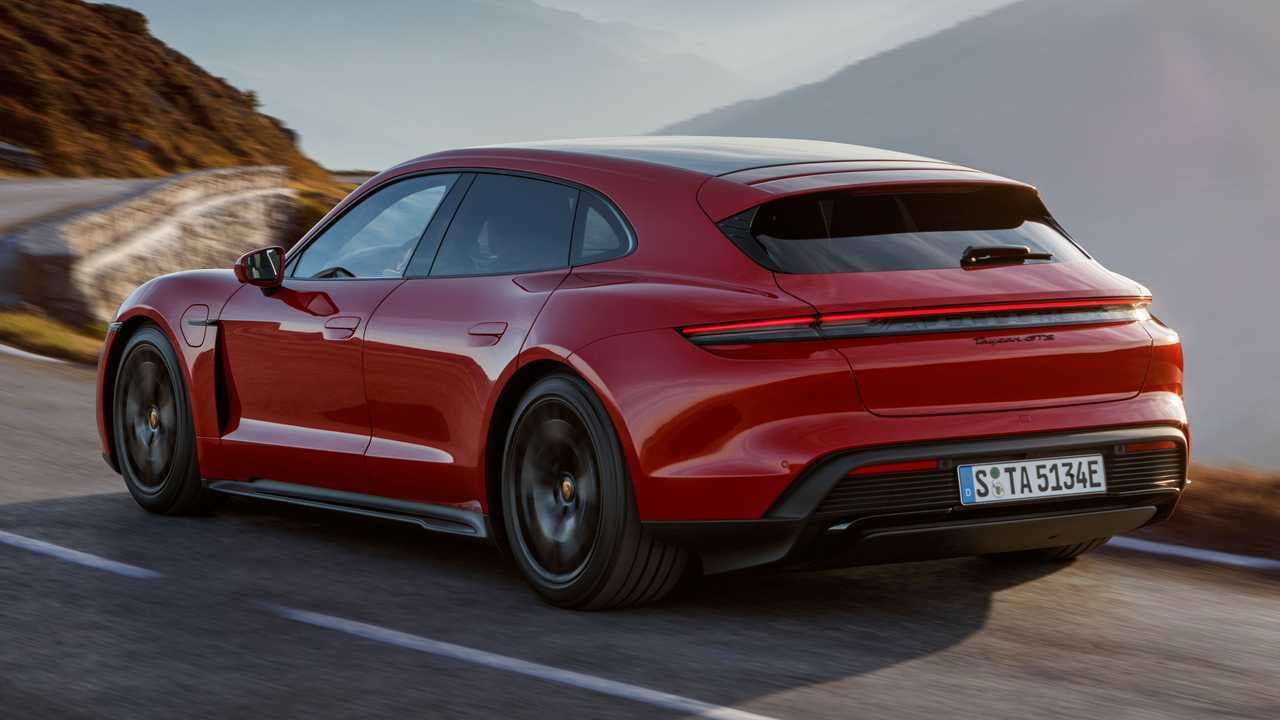
Porsche Taycan Wagons Live On — Just Not in America
The Porsche Taycan has always been more than just a sleek electric sedan. Since the brand introduced wagon-bodied variants in the form of the Taycan Sport Turismo and Taycan Cross Turismo, it gave buyers something genuinely rare in the electric vehicle market: practicality wrapped in unmistakably Porsche DNA. Now, as Porsche restructures its lineup and adjusts its North American offering, one question has been on every enthusiast's mind — do the wagons survive? The answer is yes, but with an important caveat. The Taycan Sport Turismo and Cross Turismo will continue production for markets outside the United States, leaving American buyers on the outside looking in.
For global consumers, this is genuinely good news. For Americans who fell in love with the idea of a long-roofed electric Porsche, it is a bitter pill. This article breaks down everything you need to know about the Taycan wagons' continued existence, why they are disappearing from US dealerships, and what this means for the broader electric vehicle landscape.
Understanding the Taycan Wagon Family
Before diving into the market dynamics, it helps to understand exactly what the Sport Turismo and Cross Turismo actually are and why they earned such a devoted following in a relatively short period of time.
Taycan Sport Turismo
The Taycan Sport Turismo is, at its core, a shooting brake interpretation of the standard Taycan. It retains the low, athletic stance that defines the sedan while adding a longer roofline that flows into a practical liftgate rear. The result is a car that offers noticeably more cargo capacity than the sedan — around 446 liters with all seats in use — without sacrificing the dynamic character that earns Porsche its reputation. It sits lower to the ground and feels more directly related to a traditional sports car, making it the choice for buyers who want driver engagement alongside everyday versatility.
Taycan Cross Turismo
The Cross Turismo takes the same basic formula and adds a light adventure angle. Raised ride height, standard all-wheel drive, rugged body cladding, and optional off-road-oriented Gravel mode combine to give it a crossover personality without turning it into a full SUV. It is, arguably, one of the most distinctive electric vehicles on sale anywhere in the world — a car that resists easy categorization and is better for it. Think of it as the Taycan for buyers who want to head into the mountains on a weekend and still feel planted and confident when the road turns from tarmac to gravel.
Why Are the Wagons Being Dropped in the US?
Porsche has not offered a single sweeping public explanation, but the picture assembled from market reporting and official statements points to a combination of factors that made the wagon variants commercially challenging in North America specifically.
American consumer preference has long leaned heavily toward SUVs and crossovers. Even among Porsche's own lineup, the Cayenne and Macan consistently outsell lower, sportier models. A wagon-bodied EV — however beautifully engineered — faces an uphill battle in a market that tends to reward ride height and commanding driving positions above all else. The Taycan Cross Turismo might seem like a natural fit given its raised stance and cladding, but it occupies an ambiguous space that proved difficult to communicate to mainstream American buyers who simply wanted a Taycan SUV.
Additionally, Porsche is working through a broader period of lineup rationalization as it navigates the complexities of scaling electric vehicle production, managing costs, and responding to softening EV demand in certain segments. Trimming the wagon variants from the US market allows the brand to simplify its North American inventory, focus marketing resources on the sedan and the Taycan Turbo GT halo model, and reduce complexity at the dealership level.
Where the Wagons Will Be Sold
Production of both the Sport Turismo and Cross Turismo continues for international markets, with Europe being the primary destination. It is worth remembering that the wagon body style — referred to across much of Europe as a "Kombi" or "estate" — carries far greater cultural cachet in Germany, France, the UK, and surrounding countries than it does in North America. European buyers have historically embraced practical, sporty wagons with a passion that never quite translated across the Atlantic, and Porsche is clearly serving that demand.
Asian markets and other global regions are also expected to receive continued allocations of both variants, ensuring that the production line at Porsche's Zuffenhausen and Leipzig facilities remains active for these body styles.
What This Means for EV Buyers Globally
The continuation of Taycan wagon production outside the US carries a broader significance for the electric vehicle industry. It demonstrates that there is a genuine, sustainable market for electric vehicles with distinct body styles beyond the crossover-or-sedan binary that dominates most manufacturers' EV lineups.
- It proves that premium electric wagons can find commercially viable audiences when positioned and marketed correctly in the right regions.
- It signals that Porsche has no intention of abandoning one of its most design-forward product lines, even as it adjusts regional strategy.
- It reinforces the idea that global automakers must increasingly think in terms of regional differentiation rather than one-size-fits-all global lineups.
- It may encourage other manufacturers to consider wagon or shooting brake EV variants targeted specifically at European and Asian audiences where appetite for these styles remains strong.
Should US Buyers Be Concerned About the Taycan's Future?
For American Taycan fans, the loss of the wagon variants is a genuine disappointment, but it should not be read as a sign of weakness in the broader Taycan lineup. The sedan continues in full force, and the Taycan Turbo GT — a scorchingly fast flagship variant — keeps Porsche's electric ambitions very much alive and visible in the US market. Porsche remains committed to electrification, and the Taycan family as a whole is far from facing any existential threat.
Prospective US buyers who specifically want a Sport Turismo or Cross Turismo do still have theoretical options. The used and certified pre-owned market will carry examples for years to come. Additionally, some dedicated enthusiasts may explore the process of importing a vehicle from a market where new examples are still sold, though this comes with regulatory complexity and cost that make it impractical for most buyers.
The Bigger Picture: Porsche's Global EV Strategy
Porsche's decision to maintain Taycan wagon production for international markets while stepping back from the US reflects a maturing approach to global EV strategy. Rather than forcing identical lineups onto every market regardless of local taste and demand, the brand is making calculated, regionally sensitive decisions. This kind of nuanced market management is increasingly important as the global EV industry moves past its initial growth phase and enters a more competitive, cost-conscious era.
The Taycan Sport Turismo and Cross Turismo are not going away — they are simply finding their natural home in markets that have always appreciated them most. For the millions of car enthusiasts around the world outside the United States, that is reason enough to celebrate.