
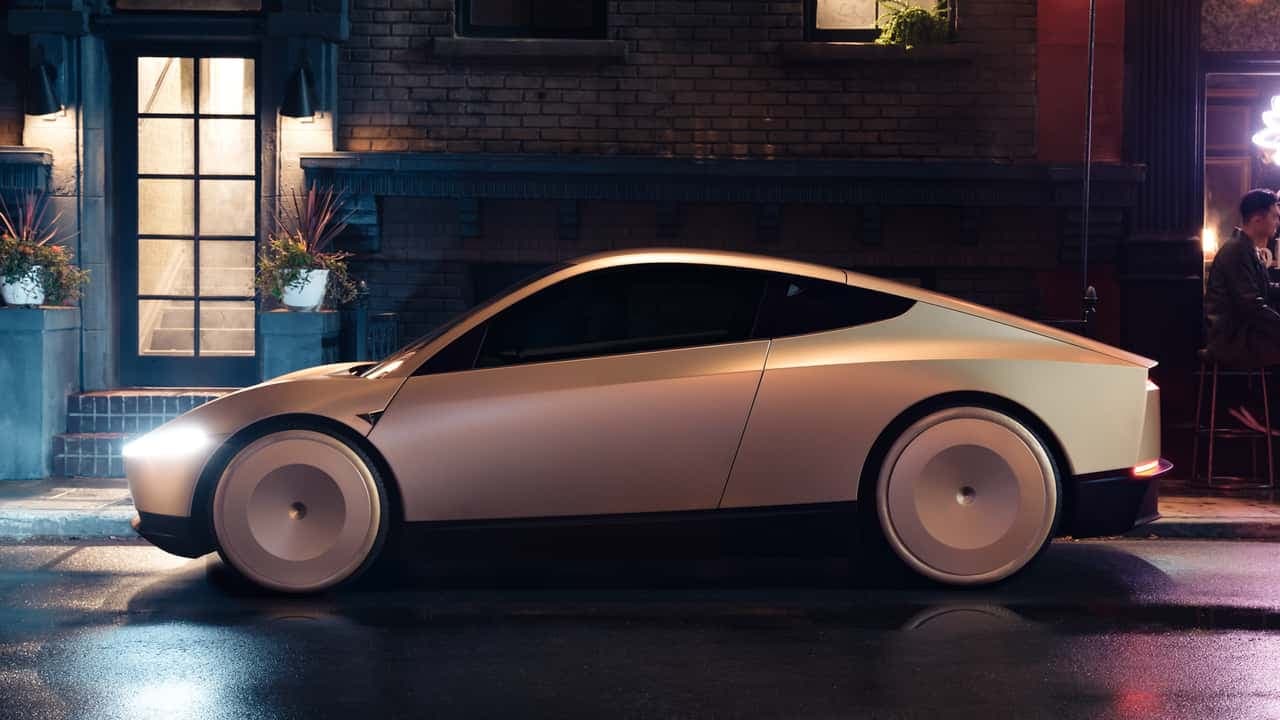
Tesla Cybercab Key Specs Are Finally Here—And They're Impressive
After months of speculation, teaser events, and carefully guarded silence, Tesla's most anticipated vehicle in years is beginning to reveal its secrets. Newly surfaced EPA documents have shed light on some of the most critical specifications for the Tesla Cybercab, and the numbers are turning heads across the electric vehicle industry. Chief among them: a jaw-dropping 418 miles of estimated range—achieved, remarkably, with a relatively compact battery pack.
For an autonomous electric vehicle designed to serve as a robotaxi, the Cybercab's efficiency figures suggest Tesla has achieved something technically significant. Here's everything we know so far and why it matters for the future of both autonomous driving and consumer EVs.
What the EPA Documents Reveal
EPA certification filings are often the first place that hard data about an upcoming vehicle surfaces, and the Tesla Cybercab is no exception. These regulatory documents, which automakers must submit before selling a vehicle in the United States, contain a treasure trove of technical specifications that Tesla has otherwise kept close to the chest.
According to the filings, the Cybercab is projected to deliver an estimated 418 miles of range on a single charge. What makes this figure especially notable is the size of the battery enabling it. Rather than relying on an enormous, heavy battery pack—the approach taken by many long-range EVs—Tesla appears to have engineered the Cybercab around efficiency first, achieving elite-level range with a smaller energy storage system than most competitors would require.
This is consistent with Tesla's broader engineering philosophy, which has long prioritized aerodynamic efficiency, low vehicle weight, and powertrain optimization over sheer battery capacity. The Cybercab appears to be the most refined expression of that approach yet.
Why 418 Miles of Range Is a Big Deal
To put 418 miles in perspective, most current EVs on the market—including some from Tesla's own lineup—top out between 250 and 370 miles of EPA-estimated range. Even the longest-range Model S variants hover around the 405-mile mark, and those vehicles are significantly larger and more powerful than the compact, purpose-built Cybercab.
For a robotaxi specifically, range is not just a bragging-rights metric. It has direct operational implications. A vehicle that can travel over 400 miles between charges can cover more rides per day, reduce downtime at charging stations, and lower the total cost of operation for fleet managers or for Tesla's own autonomous ride-hailing network. In the robotaxi business model, where revenue is tied directly to time on the road, range efficiency translates into real financial performance.
Beyond the commercial case, this level of range from a small battery is a strong signal that Tesla's engineering teams have continued to make meaningful advances in battery chemistry, cell design, and energy management systems—even as the broader EV industry has sometimes struggled to deliver on efficiency promises.
The Cybercab's Design and Its Role in Efficiency
The Cybercab's futuristic, streamlined silhouette isn't just a design statement—it's a functional aerodynamic asset. Unlike traditional vehicles, the Cybercab was designed from the ground up as an autonomous two-seat passenger pod, without the need to accommodate a steering wheel, traditional pedal controls, or many of the legacy components found in human-driven cars. This design freedom allowed Tesla's engineers to optimize the vehicle's shape, weight distribution, and interior layout in ways that simply aren't possible when retrofitting autonomy onto a conventional platform.
The result is a vehicle that cuts through the air more efficiently, requires less energy to maintain highway speeds, and benefits from regenerative braking systems tuned for a vehicle that drives itself with predictable, smooth acceleration and deceleration patterns. When a vehicle is driven by a highly optimized AI rather than a human, it can be programmed to drive in the most energy-efficient manner possible at all times—a factor that likely contributes meaningfully to the Cybercab's real-world range potential.
What This Means for Tesla's Autonomous Ambitions
The Cybercab is central to Tesla's long-stated ambition of launching a fully autonomous ride-hailing network. CEO Elon Musk has spoken publicly about the vision of Tesla owners being able to add their vehicles to a shared fleet when not in use, generating passive income, while Tesla also operates its own company-owned fleet of Cybercabs.
With 418 miles of range confirmed through official EPA channels, the Cybercab gains a crucial operational advantage in this business model. Fewer stops for charging mean more rides completed per shift, more satisfied passengers, and better unit economics. It also helps address one of the most persistent criticisms of electric autonomous vehicles: charging downtime eating into profitability.
What We Still Don't Know
Despite the valuable data provided by the EPA documents, several key questions about the Cybercab remain unanswered. These include:
- The exact battery capacity in kilowatt-hours and the specific cell chemistry Tesla is using
- Charging speed capabilities, including peak DC fast-charging rates and charge time from low to full
- The vehicle's precise curb weight, which would help contextualize its efficiency achievements
- Pricing details and availability timelines for both fleet buyers and individual consumers
- The full scope of the autonomous driving hardware suite included as standard
Tesla has historically been selective about when and how it releases detailed specifications, often letting official regulatory filings do the talking before formal product announcements fill in the gaps.
The Bigger Picture: EV Efficiency Is Evolving Fast
The Cybercab's range figures arrive at a moment when the EV industry is maturing rapidly. Early electric vehicles were defined by their limitations—limited range, slow charging, and high prices. Today, the conversation is shifting toward efficiency, total cost of ownership, and how well EVs can serve commercial and fleet applications at scale.
Tesla's ability to squeeze 418 miles of range from a compact battery pack in a two-seat autonomous vehicle is a meaningful data point in that evolving story. It suggests that the ceiling for EV efficiency has not yet been reached, and that purpose-built electric vehicles—designed without the constraints of legacy automotive architectures—may continue to raise the bar for what's possible.
As more details emerge ahead of the Cybercab's expected production launch, the EV world will be watching closely. If the EPA's figures hold up in real-world testing, Tesla will have delivered not just an impressive robotaxi, but a landmark demonstration of what modern electric vehicle engineering can achieve.