
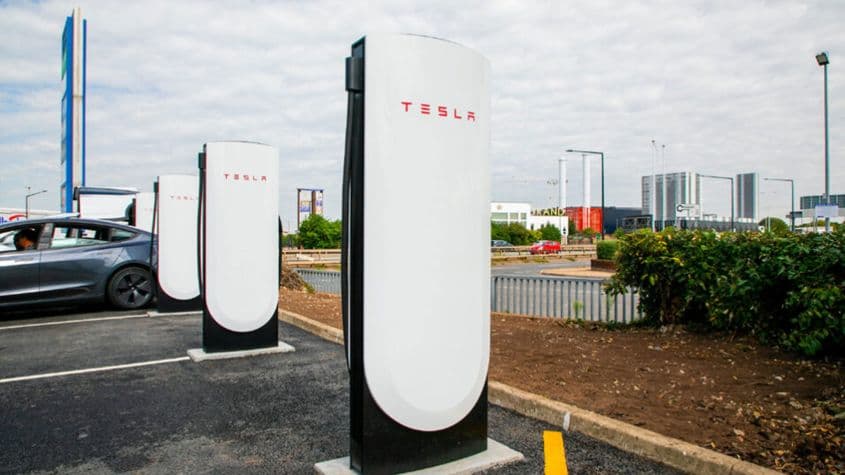
What Is a Tesla Supercharger?
When Tesla first launched its Supercharger network back in 2012, it was designed with one clear purpose: to make long-distance travel in a Tesla as seamless and stress-free as possible. Unlike the patchwork of third-party charging networks that most electric vehicle (EV) owners rely on, Tesla built and operates its own proprietary infrastructure — a global web of high-speed charging stations known as Superchargers.
Today, that network has grown into one of the largest and most reliable EV charging ecosystems in the world, with thousands of Supercharger stations spanning North America, Europe, Asia, and beyond. Each station typically contains multiple individual charging stalls, meaning you rarely have to wait long for a spot to open up. For Tesla drivers, this has long been one of the brand's biggest selling points. But the story of Tesla Superchargers has evolved significantly in recent years, and it's no longer just Tesla owners who get to benefit from them.
How Do Tesla Superchargers Work?
Tesla Superchargers are DC fast chargers, meaning they deliver direct current electricity straight to your car's battery, bypassing the onboard AC-to-DC converter that slower home chargers rely on. This is what makes them so fast — depending on the generation of Supercharger and the vehicle being charged, you can add hundreds of miles of range in under an hour.
Supercharger Generations Explained
Tesla has rolled out several generations of Supercharger hardware over the years, each offering progressively faster charging speeds.
- V1 and V2 Superchargers were the original rollout, capable of delivering up to 150 kW of power. While still functional, these older units are gradually being phased out or upgraded at many locations.
- V3 Superchargers are currently the most common type you'll encounter. They can deliver up to 250 kW per vehicle and, crucially, do not share power between adjacent stalls — meaning your charging speed is unaffected by who is plugged in next to you.
- V4 Superchargers are the newest generation and represent a major step forward. They can deliver up to 500 kW and come equipped with a longer cable, a different connector type, and improved compatibility with non-Tesla vehicles. V4 stations are being deployed at an increasing pace across Europe and North America.
The actual charging speed you experience will depend on your vehicle's maximum charge rate, the state of your battery, and the ambient temperature. Tesla's onboard battery management system automatically manages the charge rate to protect battery health — this is why charging tends to slow down as you approach 80% or 100%.
Who Can Use Tesla Superchargers?
This is where things have changed dramatically. For most of Tesla's history, Superchargers were exclusively available to Tesla vehicles. The network was a key differentiator — a major reason buyers chose Tesla over competitors. But starting in 2021, Tesla began opening its network to other brands, initially through a pilot programme in Europe and later expanding globally.
Tesla Owners
If you own a Tesla, using a Supercharger is about as frictionless as it gets. You simply pull up to a stall, plug in using the proprietary Tesla connector (or CCS in some markets), and charging begins automatically. The car recognises itself on the network and billing is handled directly through your Tesla account. There's no app to open, no card to tap, and no PIN to enter.
Non-Tesla Electric Vehicles
Thanks to Tesla's open network initiative — sometimes referred to as the Magic Dock expansion in North America — many Supercharger locations now welcome non-Tesla EVs. In Europe, this rollout has been particularly widespread, with a large proportion of Supercharger sites now accessible to any compatible electric vehicle. In the United States, the rollout has accelerated significantly, with major automakers like Ford, General Motors, Rivian, and others announcing that their vehicles would gain Supercharger access.
Non-Tesla drivers typically need to download the Tesla app, create an account, and initiate charging through the app at supported locations. Some V4 stations include a CCS connector as standard, while others use an adapter (the so-called Magic Dock) to bridge the gap between Tesla's proprietary plug and the CCS standard used by most other EVs.
It's worth noting that not every Supercharger station is open to non-Tesla vehicles — availability varies by location, so checking the Tesla app or website before you travel is always advisable.
How Much Does It Cost to Use a Supercharger?
Supercharger pricing is not a fixed rate and varies considerably depending on your country, the specific station, the time of day, and whether you're a Tesla owner or driving another brand. Tesla typically charges either per kilowatt-hour (kWh) of energy delivered or per minute of charging, depending on local regulations.
Tesla owners who purchased certain vehicle configurations or subscription plans may also be entitled to free Supercharging credits, though the days of unlimited free Supercharging for all Tesla buyers are largely in the past. Non-Tesla drivers generally pay a slightly higher rate than Tesla owners at the same station.
How to Find a Tesla Supercharger Near You
Finding a Supercharger station is straightforward whether you're in a Tesla or not. Tesla owners can see real-time station availability, including how many stalls are occupied, directly from their vehicle's navigation system. Non-Tesla drivers can use the Tesla app or visit Tesla's website to locate nearby stations, filter by non-Tesla availability, and check live occupancy data.
Many third-party EV route planning apps, such as A Better Route Planner (ABRP), have also integrated Tesla Supercharger data, making trip planning across mixed charging networks more convenient than ever before.
Are Tesla Superchargers Reliable?
Reliability has historically been one of the strongest arguments in favour of the Tesla Supercharger network. Because Tesla owns and operates the stations end-to-end — from the hardware to the billing software — the experience tends to be far more consistent than third-party networks, where a broken screen, a failed payment terminal, or a network outage can leave you stranded.
That said, as the network opens to more vehicles and demand increases, some high-traffic stations during peak hours can see wait times. Tesla continues to expand the network aggressively to keep pace with growing demand, and the introduction of V4 Superchargers with more stalls per site should help ease congestion at the busiest locations.
The Bottom Line
Tesla Superchargers represent one of the most compelling infrastructure achievements in the electric vehicle industry. Fast, reliable, and increasingly open to all EV drivers, they set a high bar for what public charging can and should look like. Whether you're a Tesla owner planning a road trip or a non-Tesla driver looking to take advantage of the network for the first time, understanding how Superchargers work — and where to find them — puts you firmly in the driver's seat.