
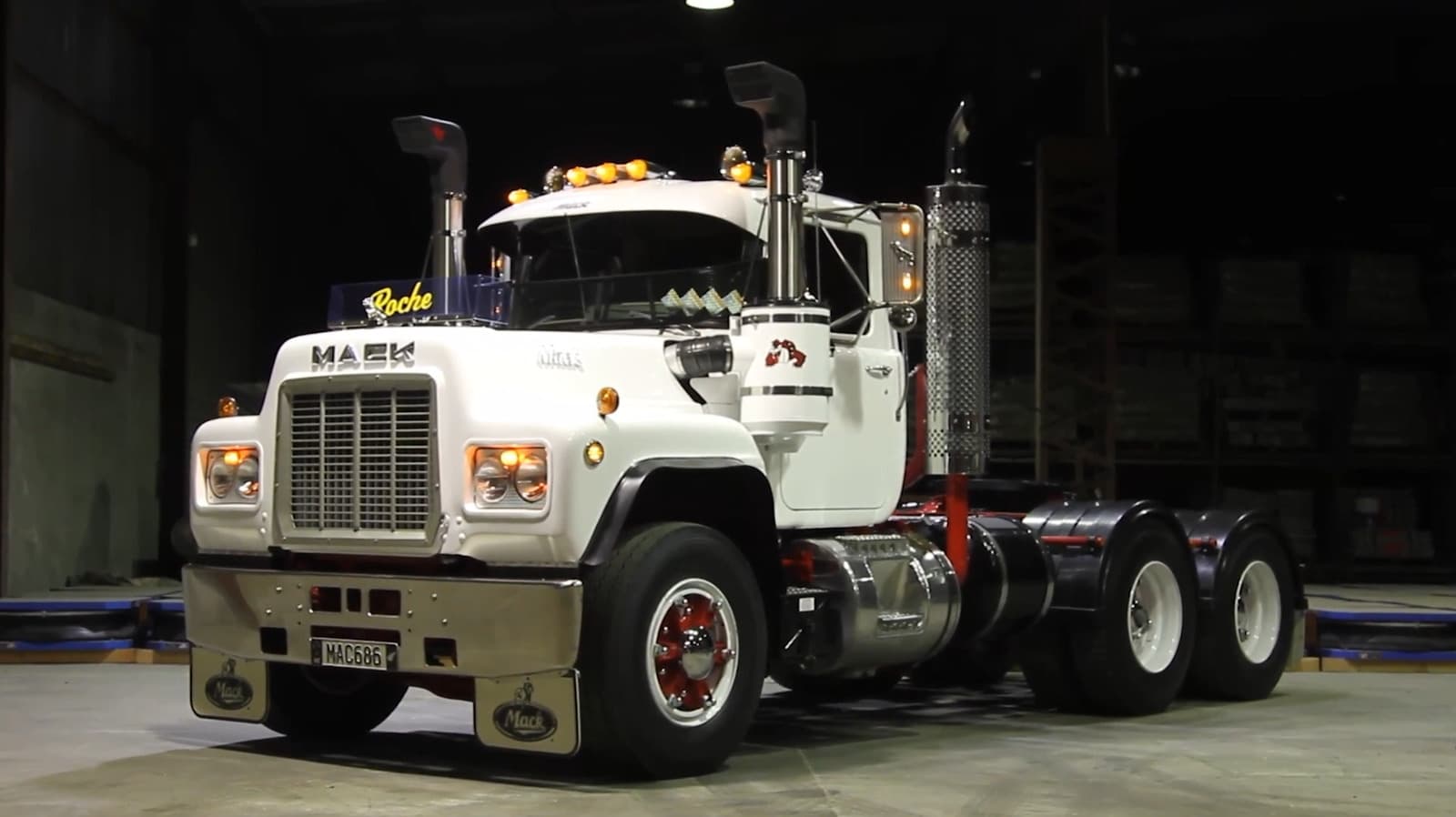
The Diesel Engine That Changed Everything for Heavy Trucks
In the long and storied history of commercial trucking, very few individual components have reshaped an entire industry the way one diesel engine did. When engineers cracked the code on delivering power more efficiently, predictably, and powerfully through a diesel platform, the ripple effects were felt across torque curves, transmission gearing, fuel economy standards, and the everyday experience of drivers hauling freight across continents. This is the story of a breakthrough that quietly but permanently rewrote the rulebook on how heavy trucks make power.
Understanding the Problem With Traditional Diesel Power
Before this landmark engine arrived, heavy truck diesel powerplants operated with a fundamental limitation: their torque curves were narrow, peaky, and unforgiving. Drivers had to work their gearboxes relentlessly to keep the engine spinning within its productive RPM window. Miss that window, and the truck bogged down, smoked excessively, and consumed fuel at punishing rates. For long-haul operators, this translated to driver fatigue, higher maintenance costs, and unpredictable performance across variable terrain and load conditions.
Transmission manufacturers responded by adding more gear ratios — 10-speeds, 13-speeds, and eventually 18-speed gearboxes — all in an effort to keep diesel engines operating in their narrow sweet spot. The mechanical complexity ballooned. Training new drivers became more demanding. Fleet maintenance costs climbed. The industry needed a fundamentally better answer, not just more gears to compensate for an engine's shortcomings.
The Breakthrough: Electronic Engine Management Meets Diesel Engineering
The Detroit Diesel Series 60 arrived in 1987 and it did not merely improve on existing diesel technology — it rendered much of the old thinking obsolete. As the first heavy-duty diesel engine to integrate a fully electronic engine control module (ECM) from the ground up, the Series 60 gave engineers and fleet operators an unprecedented ability to manage fuel delivery, injection timing, and power output with precision that mechanical systems simply could not match.
Where older mechanical injection systems delivered fuel in a relatively fixed pattern dictated by cam profiles and spring tensions, the Series 60's electronic brain continuously monitored engine load, throttle position, turbocharger boost, coolant temperature, and ambient conditions. It then adjusted injection timing and duration in real time, optimizing combustion for the specific demand being placed on the engine at that exact moment. The result was a torque curve that was flatter, broader, and far more usable across a much wider RPM range.
What a Flatter Torque Curve Actually Means on the Road
For anyone who has never driven a fully loaded 80,000-pound combination vehicle up a long grade, the significance of torque curve shape can be abstract. In practice, it is everything. A flat, broad torque curve means the engine generates strong, consistent pulling force whether it is spinning at 1,200 RPM or 1,800 RPM. The driver does not need to downshift as aggressively or as frequently to maintain speed. The truck climbs grades more smoothly, acceleration from stops feels more linear, and the entire driving experience becomes less physically and mentally exhausting over the course of a 600-mile day.
With the Series 60 producing peak torque across a far wider band than its predecessors, transmission engineers could actually simplify their gear count requirements rather than expand them. A truck with a forgiving, broad-torque diesel no longer needed 18 gears to survive real-world driving conditions. This insight helped pave the way for the automated manual transmissions and eventually the fully automatic units that dominate modern heavy trucking today.
The Downstream Impact on Gearing and Drivetrain Design
The relationship between engine torque characteristics and drivetrain design is deeply interconnected. Once the Series 60 proved that electronic management could deliver power more intelligently, every aspect of the truck's drivetrain began to be reconsidered. Rear axle ratios were adjusted to take advantage of the engine's ability to pull from lower RPMs. Final drive gearing could be numerically taller, meaning the engine turned more slowly at highway speeds, which directly reduced fuel consumption and mechanical wear.
Transmission makers like Eaton and Allison recalibrated their own software and gear spacing to complement the new diesel torque profiles. The entire commercial drivetrain ecosystem began evolving in response to what one engine had demonstrated was possible. Within a decade, electronic engine management went from a novelty to an absolute industry standard, with Cummins, Caterpillar, Volvo, and Paccar all developing their own sophisticated electronic diesel platforms.
Emissions, Efficiency, and the Lasting Legacy
Beyond performance, the electronic control architecture that the Series 60 pioneered became the essential foundation for meeting tightening emissions regulations. Without the ability to precisely time and meter fuel injection, modern diesel engines could never have achieved the low particulate and NOx outputs required by EPA standards introduced through the 1990s and 2000s. The same ECM technology that made the engine more powerful also made it cleaner, quieter, and more thermally efficient.
Key Milestones Enabled by This Engineering Shift
- Exhaust gas recirculation (EGR) systems became viable because electronic controls could manage the added combustion complexity without sacrificing drivability.
- Common rail high-pressure injection systems, which inject fuel at pressures exceeding 30,000 PSI, rely entirely on electronic precision that traces back to this foundational shift.
- Diesel particulate filters and selective catalytic reduction systems integrate seamlessly with modern ECMs, enabling emissions compliance while preserving power output.
- Predictive cruise control, which reads GPS topography to pre-adjust engine and transmission behavior before a hill is reached, would be impossible without this electronic infrastructure.
Why This Story Still Matters for Modern Trucking
It is easy to look at today's 500-horsepower, 1,850 lb-ft diesel engines with their 12-speed automated transmissions and sophisticated telematics systems and assume they represent an entirely different technology from what came before. In a sense they do — but they are also the direct descendants of the thinking that one engine made credible. The decision to put an intelligent electronic brain in control of diesel combustion, rather than trusting purely mechanical systems, was the hinge point on which all of modern heavy truck engineering turns.
Fleet operators who once struggled with driver retention because their trucks were physically demanding to operate now benefit from vehicles that are genuinely easier to drive well. Fuel economy figures that seemed unreachable in the era of mechanical injection are now baseline expectations. The environmental improvements that have transformed diesel's public image from dirty and loud to clean and capable all flow from the same source: an engine that proved electronics and diesel combustion belonged together.
Conclusion
The diesel engine that changed how heavy trucks make power did so not through brute force or displacement alone, but through intelligence. By applying electronic control to the combustion process, it unlocked a broader, more usable torque curve, simplified drivetrain requirements, improved fuel efficiency, and created the platform on which every emissions and performance advance of the following four decades has been built. In an industry defined by tons, miles, and margins, that kind of engineering legacy is genuinely priceless.