
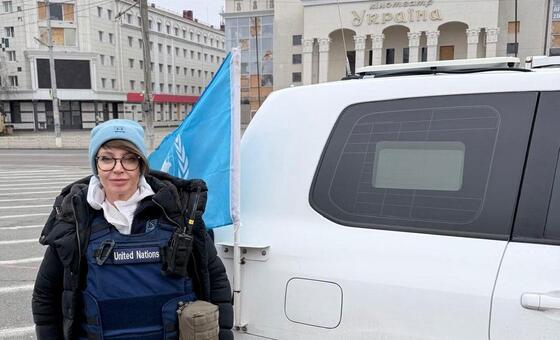
The Relentless Reality Facing Aid Workers in Ukraine
As Russia's full-scale invasion of Ukraine stretches into its fifth year, the phrase "the day never stops" has become more than a figure of speech for the men and women delivering humanitarian assistance on the ground. It is a lived reality — one measured not in office hours but in air raid sirens, close calls, and the relentless pressure of knowing that somewhere, someone is waiting for food, medicine, or shelter that only they can deliver.
Conditions across southern Ukraine have deteriorated with alarming speed in recent months. What was already one of the most dangerous humanitarian theaters in the world has grown more volatile, more unpredictable, and more punishing for the organizations trying to sustain operations there. Understanding what aid workers face — and why they continue — is essential to understanding the broader human cost of this conflict.
Southern Ukraine: A Rapidly Deteriorating Situation
Southern Ukraine has long sat at the intersection of military pressure and civilian suffering. Proximity to front lines, strategic infrastructure targets, and dense civilian populations make the region both critically important for humanitarian response and extraordinarily dangerous for those carrying it out.
In the past year alone, Russian forces have dramatically escalated their use of drones and long-range missiles targeting Ukrainian cities and towns. These are not attacks confined to military installations. Residential neighborhoods, markets, hospitals, and the supply routes that humanitarian convoys depend on have all been struck. For aid organizations operating in the region, this means that the risk calculus has shifted from manageable uncertainty to near-constant threat.
Power grid attacks have compounded the crisis. Repeated strikes on energy infrastructure have left millions of Ukrainians without reliable electricity, heating, and water — driving up demand for humanitarian services precisely at the moment when delivering those services becomes harder and more dangerous.
The Balancing Act: Aid Delivery vs. Risk Management
Humanitarian organizations working in Ukraine face a challenge that has no clean solution: how do you sustain life-saving operations in an environment where the act of delivering aid can cost you your own life?
Every convoy route must be assessed not just for road conditions but for recent strike patterns. Every warehouse location is evaluated for its proximity to likely targets. Every team deployment is weighed against current threat intelligence. Aid workers describe a continuous, exhausting cycle of planning, reassessing, and adapting — often in real time as conditions on the ground shift faster than any operational plan can anticipate.
This is not abstract risk management. It is the difference between a driver reaching a distribution point and not coming back. Organizations have had to develop intricate protocols around movement windows, shelter-in-place procedures, and communications blackouts designed to keep staff as safe as possible without halting operations entirely. The tension between those two imperatives — keep people safe, keep aid flowing — defines the daily experience of humanitarian work in southern Ukraine.
Who Are the Aid Workers on the Ground?
Behind every supply convoy and every emergency distribution point is a team of individuals whose commitment to their mission has been tested in ways that most people will never experience. Many are Ukrainian nationals — people whose own families live under the same threat they navigate every working day. Others are international staff who have chosen to remain in-country despite the growing danger, driven by a sense of professional responsibility and, often, deep personal bonds with the communities they serve.
The psychological toll is significant and growing. Aid workers in conflict zones are known to experience elevated rates of burnout, post-traumatic stress, and moral injury — the particular wound that comes from witnessing suffering you cannot fully prevent. In Ukraine, these pressures are intensified by the duration of the crisis. Five years into a full-scale invasion, with no clear end in sight, even the most resilient individuals are being tested at the limits of human endurance.
Why Sustained Humanitarian Access Matters
It can be tempting, from a distance, to see humanitarian operations as a secondary consideration — important, certainly, but somehow separate from the central drama of the war. That framing is dangerously wrong. Sustained humanitarian access is not peripheral to the situation in Ukraine; it is central to the survival of millions of civilians.
- Millions of Ukrainians remain internally displaced and dependent on humanitarian assistance for basic needs including food, clean water, and medical care.
- Older adults, people with disabilities, and families with young children often cannot evacuate and are among the most vulnerable populations in conflict-affected areas.
- Without consistent aid delivery, communities in frontline regions face not just hardship but the very real risk of starvation, disease, and complete social breakdown.
- Humanitarian organizations also serve as critical witnesses, documenting conditions and needs that inform international response and accountability efforts.
When aid operations are disrupted — by strikes, by access restrictions, or by the simple exhaustion of overstretched organizations — it is civilians who pay the price first and most severely.
The International Response: Funding Gaps and Political Fatigue
Sustaining humanitarian operations in Ukraine also requires sustained international commitment — and that commitment is increasingly under pressure. Donor fatigue is a real phenomenon in protracted crises. As Ukraine's war extends year after year, competing global emergencies draw attention and resources elsewhere, and public momentum can fade even as needs intensify on the ground.
Funding shortfalls directly translate into reduced capacity: fewer staff, smaller stockpiles, more limited reach into the most dangerous and most needy areas. Humanitarian organizations operating in southern Ukraine have repeatedly warned that without consistent, adequate funding, they will be forced to make impossible choices about where to concentrate resources and who goes without.
A Crisis That Demands Continued Attention
For the aid workers who wake each morning in southern Ukraine knowing that the day ahead will bring sirens, risk assessments, and the weight of other people's urgent need, there is no option to look away. The day never stops — not for the people who need help, and not for the people who have committed their professional lives to providing it.
The rest of the world does have the option to look away. The question Ukraine's fifth year puts to the international community is whether it will choose to exercise that option — or whether it will match the courage of those on the ground with the sustained attention, resources, and political will that this ongoing human catastrophe demands.