
A Hidden Compliance Problem Is Pulling Drivers Off the Road
Two commercial drivers — both experienced, both well-connected in the trucking industry — discovered within the same week that their CDLs were at serious risk. Not because they failed a drug test. Not because they had a moving violation. Not because they skipped their DOT physical. They were at risk because their physician forgot to click a button.
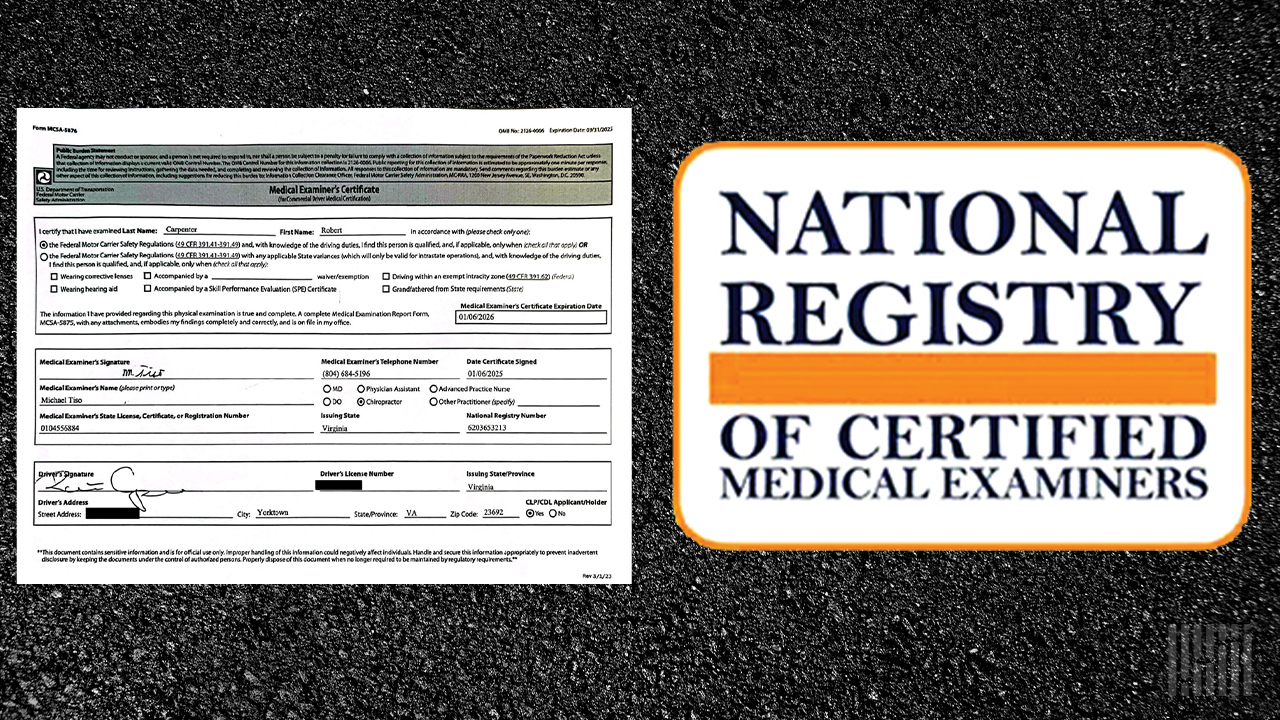
Gord Magill, a veteran of the trucking industry whose voice carries weight in this space, completed his DOT physical in New York without issue. His medical examiner handed him the certificate, the appointment ended, and he went back to work. Weeks later, Magill discovered that the physician had never uploaded his results to FMCSA's National Registry system. As far as the state of New York was concerned, he had no valid medical certification on file. Mill owner Sam Motley had the identical experience with a different physician in Virginia. Two different states. Two different doctors. The exact same failure.
These are not isolated incidents. Trucking compliance professionals report receiving dozens of calls every week from drivers in the same situation. In every case, the driver did everything right. In every case, the physician did not complete the process. And in every case, the driver faced a CDL downgrade that would have pulled them off the road through absolutely no fault of their own.
What Changed in the DOT Medical Certification Process
To understand why this is happening, it helps to know what the system used to look like — and what it looks like now.
Under the old system, a commercial driver who completed a DOT physical walked away from the appointment with two documents: a Medical Examiner's Certificate and a long-form physical record. The driver was then personally responsible for delivering that certificate to their state driver licensing agency. The state would update the Motor Vehicle Record (MVR) to reflect a current, valid medical certification, and the driver was compliant. The burden sat squarely on the driver's shoulders, and most drivers handled it without incident because they understood their license depended on it.
FMCSA changed that model. Under the current system, the certified medical examiner is now required to electronically transmit the results of every DOT physical — including the Medical Examiner's Certificate — directly to FMCSA's National Registry of Certified Medical Examiners. The state licensing agency then pulls that data from the National Registry to update the driver's record. The driver is no longer the delivery mechanism. The physician is.
The problem is that a significant portion of certified medical examiners either do not fully understand this requirement or have not built it consistently into their practice workflows. The compliance burden has shifted, but the awareness hasn't followed.
Why This Problem Keeps Getting Worse
This issue mirrors what happened when FMCSA launched the Drug and Alcohol Clearinghouse. The Clearinghouse has been operational for over six years, yet carriers and owner-operators continue to discover it for the first time on a regular basis. Half of the carriers in the industry still aren't fully engaged with Clearinghouse compliance. The pattern is consistent: FMCSA implements a significant systemic change, and a substantial portion of the affected community simply doesn't get the message.
With medical certifications, the stakes for individual drivers are immediate and severe. If a physician completes a DOT physical but fails to upload the results to the National Registry within the required timeframe, the state has no way of knowing the driver is medically certified. That gap in the record can trigger a CDL downgrade — a status change that prevents the driver from legally operating a commercial motor vehicle.
Unlike a missed renewal date or an expired medical card that a driver can catch themselves, this failure is entirely outside the driver's control once they leave the exam room. They have no direct access to the National Registry to verify that their physician submitted the records. By the time the gap surfaces — often during a roadside inspection, an employment screening, or a routine MVR check — the damage is already done.
What Commercial Drivers Should Do Right Now
Awareness is the first line of defense. Every commercial driver who has completed a DOT physical in the past several years should take the following steps to verify their records are accurate and current.
- Request confirmation from your medical examiner. After every DOT physical, ask the physician or their office staff to confirm in writing that the results have been uploaded to the FMCSA National Registry. Do not assume it has been done because you received your physical certificate.
- Check your Motor Vehicle Record. Request a current MVR from your state driver licensing agency and confirm that your medical certification status is listed as current and valid. This is the record that law enforcement and employers see.
- Verify on the FMCSA website. FMCSA provides a public search tool on the National Registry website where drivers can look up their medical examiner by license number to confirm the examiner is certified and active. While this doesn't confirm your specific record was uploaded, it can surface red flags about the provider you used.
- Act quickly if something is wrong. If your MVR shows no current medical certification but you have a valid physical certificate in hand, contact your state DMV immediately and bring your documentation. In many cases, the state can initiate a correction, but time matters. A CDL downgrade that sits on a record too long can create cascading compliance issues.
- Work with a compliance professional. Carriers and owner-operators who manage multiple drivers should build regular MVR monitoring into their compliance programs. Catching these gaps proactively is far less costly than dealing with a downgraded CDL at the worst possible moment.
The Responsibility Gap Between Physicians and Drivers
There is a fundamental mismatch at the heart of this problem. Commercial drivers understand that their CDL is their livelihood. Most will do whatever it takes to stay compliant because the consequences of non-compliance are immediate and personal. Medical examiners, by contrast, may perform DOT physicals as a small fraction of a much broader clinical practice. For them, the FMCSA National Registry upload is one administrative step among many. The urgency simply isn't the same.
FMCSA needs to close this awareness and enforcement gap. Certified medical examiners must understand that an incomplete upload isn't a minor paperwork oversight — it is a compliance failure that can end a professional driver's ability to work. Until that message reaches every provider on the National Registry, drivers will continue to bear the real-world consequences of a process they no longer control.
In the meantime, the most practical advice for any commercial driver is straightforward: verify everything, trust nothing, and never assume that completing your DOT physical is the same as having your records updated. In today's system, it isn't.