
2026 Austrian Grand Prix: Track Guide and Full Tech Overview
The 2026 Formula 1 season rolls into the Styrian mountains for one of the calendar's most thrilling stops — the Austrian Grand Prix at the iconic Red Bull Ring. With a completely overhauled regulatory framework reshaping how cars perform on track, and several teams arriving with significant technical upgrades or troubling reliability concerns, the stage is set for one of the most technically fascinating race weekends of the season. Here is everything you need to know about the track, the technology, and the storylines heading into race day.
The Technical Storylines Defining This Weekend
Before diving into the circuit itself, it is worth understanding the key narratives that will define the 2026 Austrian Grand Prix from a technical standpoint. Mercedes arrives at the Red Bull Ring under a dark cloud, with both Kimi Antonelli and George Russell battling sudden and potentially dangerous electrical blackouts affecting their W17 chassis. These power interruptions represent a serious engineering concern, as any unplanned loss of electrical output at high speed on a circuit like Spielberg could have severe consequences for both driver safety and race performance.
On the other end of the spectrum, Scuderia Ferrari is arriving with optimism. The Italian manufacturer has brought a highly anticipated power unit upgrade that has received formal approval from the FIA's ADUO (Automotive Design and Utilisation Office), the regulatory body responsible for overseeing the new 2026 power unit framework. If the upgrade delivers on its projected performance gains, Ferrari could find themselves in an especially strong position given how the Spielberg layout interacts with the 2026 technical regulations.
Understanding the 2026 Active Aerodynamic Rules
To appreciate how this weekend's battle will be won or lost, you first need to understand how radically the 2026 aerodynamic rulebook has changed Formula 1. The traditional Drag Reduction System, better known as DRS, has been completely eliminated. After more than a decade as the sport's primary overtaking aid, DRS has been replaced by two entirely new systems that place greater demands on both driver skill and team strategy.
Straight Mode (SM)
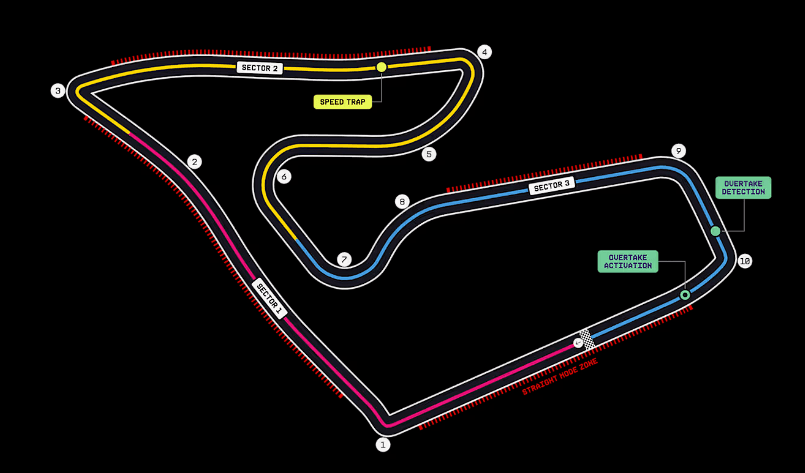
Straight Mode, or SM, allows a car's front and rear wings to physically open up along designated straight sections of a lap. When activated, this configuration dramatically reduces aerodynamic drag, allowing the car to achieve significantly higher top speeds than it could in its standard downforce-generating configuration. Unlike DRS, which only adjusted the rear wing, Straight Mode affects both aerodynamic surfaces simultaneously, representing a far more comprehensive drag-reduction solution. Teams will need to carefully calibrate how their cars manage the transition between high-downforce cornering and low-drag straight-line running.
Overtake Mode (OM)
The second new system, Overtake Mode, functions as a driver-operated power management tool designed to facilitate genuine wheel-to-wheel racing. If a driver is within one second of the car ahead at a designated detection point on the circuit, they become eligible to deploy an additional electrical power profile for a set period on the following lap. This grants the trailing driver a sustained higher speed advantage over a longer duration, rather than the short, sharp burst that traditional ERS deployment offered. Overtake Mode adds a strategic layer to race management, as teams must decide when to trigger it and how to conserve the electrical energy needed to make it effective.
Red Bull Ring Track Guide: Where the Race Is Won
The Red Bull Ring is a deceptively short and seemingly simple circuit, but its compact layout masks a series of critical technical demands. With just 10 corners and roughly 75 percent of each lap spent at full throttle, Spielberg is among the most power-sensitive venues on the Formula 1 calendar. This characteristic makes the Austrian Grand Prix a direct test of power unit performance, which is precisely why Ferrari's new upgrade carries such significance this weekend.
High Altitude and Its Effect on Performance
Situated in the Styrian mountains, the Red Bull Ring sits at an elevation of approximately 700 metres above sea level. This altitude reduces air density, which has two notable consequences. First, aerodynamic downforce generation is reduced, meaning teams must run slightly higher wing angles to compensate. Second, combustion efficiency in the internal combustion engine component of the power unit is affected, making the electrical deployment systems — including the new Overtake Mode — comparatively more influential on overall laptime. Teams with stronger hybrid systems and more refined electrical energy management will carry a natural advantage here.
Key Sections Under the New Regulations
The opening sequence through Turns 1 and 2 represents one of the circuit's primary overtaking opportunities, and the interaction between Straight Mode activation on the main straight and the braking zone into Turn 1 will be closely watched. Teams that can deploy Straight Mode aggressively while maintaining sufficient mechanical and aerodynamic stability into the heavy braking zone will have a decisive edge. The back section of the circuit, which flows through a series of high-speed medium-load corners before returning to the pit straight, will test the balance teams have struck between drag reduction and downforce under the new aero framework.
What to Watch for on Race Day
The 2026 Austrian Grand Prix is shaping up to be a genuine referendum on the new regulations. Ferrari's power unit upgrade will be scrutinised for every tenth of a second, while Mercedes will be working frantically to understand and resolve their electrical reliability issues before they cost the team points — or worse. The interplay between Straight Mode and Overtake Mode will also generate tactical interest throughout the race, as drivers manage energy, proximity gaps, and deployment windows simultaneously.
Whether you are a lifelong Formula 1 fan or a newcomer drawn in by the excitement of a completely reimagined technical era, the Austrian Grand Prix at Spielberg promises to deliver exactly the kind of high-speed, high-stakes drama that makes this sport unique. Keep a close eye on the technical details — because in 2026, the battle is being fought on multiple fronts at once.