
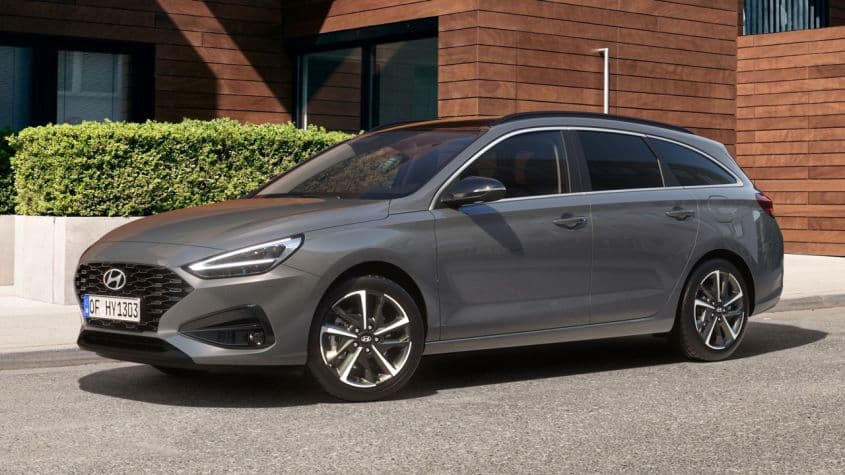
The End of the Road for Hyundai Estate Cars
It is official. Hyundai has closed the chapter on its estate car lineup, confirming that there are no plans to produce new wagons under the brand going forward. For many automotive enthusiasts, this announcement stings — not just because of what it means for Hyundai, but because of what it represents for the estate car as a species. Another major manufacturer has walked away, and the coffin of the traditional wagon body style has received yet another nail.
The decision did not come entirely out of nowhere. Consumer trends have been shifting for years, with SUVs and crossovers steadily cannibalizing the market share that estate cars once dominated. But for a brand like Hyundai, which had built a reputation for offering practical, value-driven alternatives to mainstream European models, the departure feels significant. So what does this mean for drivers who still love a good load-lugging wagon, and what does it tell us about where the automotive industry is heading?
Why Hyundai Is Walking Away from Wagons
To understand the decision, you have to look at the numbers. Estate cars have been in structural decline across Europe and beyond for well over a decade. Once considered the sensible family car of choice — roomy, capable, and more planted on the road than a hulking SUV — the wagon has been progressively squeezed out by a market that increasingly favours ride height, commanding seating positions, and the perceived sense of adventure that crossovers project, however rarely that adventure materialises in practice.
Hyundai, like every other manufacturer, goes where the demand is. Developing a new vehicle platform is an enormously expensive undertaking, and committing those resources to an estate car body style that represents a shrinking slice of total sales simply does not make financial sense in today's market. The rise of electric vehicles adds another layer of complexity — battery architecture often favours the proportions of an SUV, making the low-slung estate even harder to justify from an engineering standpoint.
Rather than fighting the tide, Hyundai has chosen to concentrate its efforts on SUVs, crossovers, and an expanding electric vehicle portfolio that includes models like the Ioniq 5, Ioniq 6, and the ambitious Ioniq 9. These are the vehicles that are selling, and these are the vehicles that will define Hyundai's identity for the next generation of buyers.
A Broader Crisis for the Estate Car
Hyundai is far from alone in stepping back from estate cars. Across the industry, the list of wagons that have been quietly discontinued or allowed to fade without a successor has grown alarmingly long. Ford axed the Mondeo Estate. Volkswagen has shifted focus toward SUV derivatives of its Passat. Honda and Toyota have all but abandoned traditional wagon forms in favour of lifted crossover alternatives.
The brands still producing true estate cars — Volvo, with its V60 and V90, and a handful of others — are increasingly the exception rather than the rule. Even Mercedes-Benz, which has long championed the estate format with its C-Class and E-Class wagons, has been pruning its lineup in response to shifting tastes.
What we are witnessing is not a temporary dip. It is a fundamental restructuring of the automotive market, driven by consumer preference, platform economics, and the electrification wave. Estate cars have not become worse — in many ways, modern wagons are better than they have ever been — but the audience willing to choose one over an SUV has simply contracted too far for most manufacturers to justify the investment.
What Do Estate Car Fans Do Now?
If you are among the loyal contingent of drivers who still believes the estate car is the most sensible, most driver-focused, and most honest way to carry a family and its luggage, the news is admittedly grim. Your options are narrowing with every passing model cycle. But there are still choices on the market worth knowing about:
- Volvo V60 and V90: Volvo remains the most committed mainstream champion of the estate format, offering genuinely desirable wagons with strong safety credentials and premium interiors.
- Skoda Octavia Estate: One of the most practical cars on sale at any price point, the Octavia Estate continues to make an overwhelming case for the wagon with its cavernous boot and composed driving manner.
- BMW 3 Series Touring: For those who want driving engagement alongside load-carrying ability, the 3 Series Touring remains one of the finest estates available.
- Audi A4 Avant: A premium option that blends refinement with genuine usability, the A4 Avant is another stalwart of the estate car faithful.
These models survive partly because their manufacturers have cultivated deeply loyal audiences willing to pay a premium for the estate form — a dynamic that does not apply as cleanly to volume brands like Hyundai, where buyers are typically more price-sensitive and cross-shop more broadly.
Is There Any Hope for a Hyundai Wagon Revival?
The honest answer is: probably not anytime soon. Hyundai's stated position leaves little room for optimism, and there is no indication that consumer preferences are shifting back toward estates at the kind of scale that would justify a new development program. If anything, the pace of change in the industry — toward electrification, software-defined vehicles, and SUV-dominant lineups — makes a return even less likely in the medium term.
That said, niche revivals are not unheard of. Manufacturers occasionally rediscover the appeal of a forgotten body style when the competitive landscape clears and a gap emerges. An electric Hyundai wagon, built on the E-GMP platform and positioned as a practical alternative to the Ioniq 5, is not a completely impossible imagining — but it would require a significant shift in boardroom thinking, and for now, that thinking is pointed firmly elsewhere.
The Verdict: Another Farewell to a Dying Breed
Hyundai's decision to abandon the estate car is a rational one, driven by market realities that are hard to argue with. But it is also a moment worth pausing over, because each manufacturer that exits the wagon market makes it harder for the body style to sustain itself — fewer choices mean less visibility on forecourts, which accelerates the decline further in a self-reinforcing cycle.
For drivers who still swear by the estate, the message is clear: choose wisely and choose soon, because the window of opportunity to buy a genuinely brilliant new wagon is getting smaller with every passing year. Hyundai has hammered its nail. The question is how many more it will take before the coffin is sealed for good.