
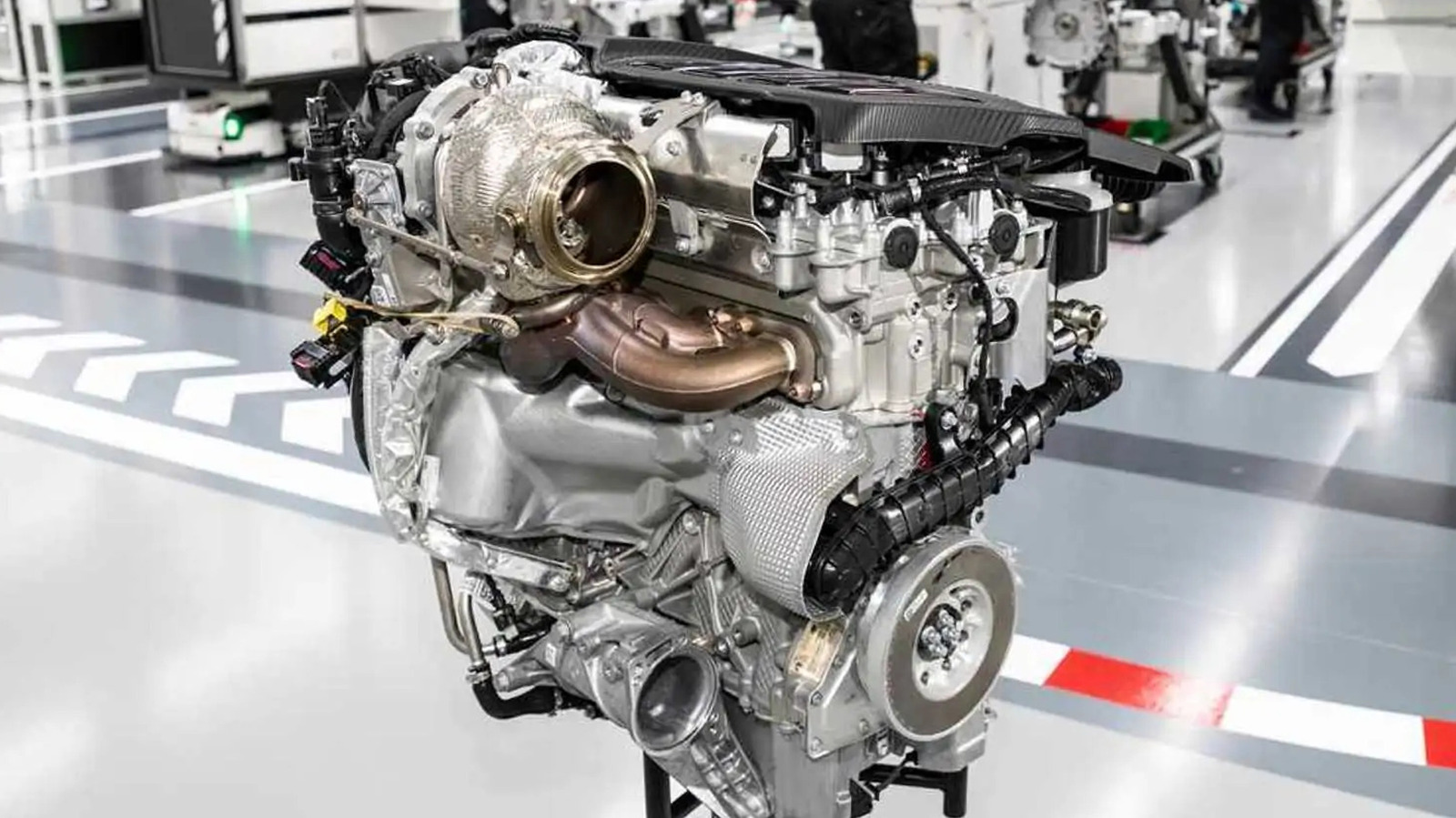
The Mercedes M139: Engineering's Most Powerful Four-Cylinder
When most performance enthusiasts think about earth-shattering power outputs, they picture V8s, V10s, or the occasional twin-turbocharged six-cylinder. Few would picture a four-cylinder engine sitting at the top of that conversation. Yet that's exactly where Mercedes-AMG has planted its flag with the M139 — an engine that has redefined what a four-cylinder is capable of producing, and in doing so, sparked genuine debate among drivers, critics, and engineers on both sides of the Atlantic.
The Mercedes M139 holds the distinction of being the most powerful mass-produced four-cylinder engine in automotive history. It's an extraordinary engineering achievement. But as Mercedes-Benz has discovered, building the most powerful version of something doesn't automatically make it the most beloved version — particularly in the United States, where driver feedback has been notably more mixed than in Britain.
What Makes the M139 So Special?
To understand the M139's significance, it helps to appreciate just how difficult it is to extract serious power from only four cylinders. A four-cylinder engine is inherently limited in displacement compared to larger configurations, meaning engineers must work much harder to generate equivalent horsepower through forced induction, advanced combustion management, and precision thermal engineering.
Mercedes-AMG's answer was the M139, a 2.0-liter turbocharged inline-four that produces an astonishing 416 horsepower in its most potent form. That translates to an output of 208 horsepower per liter — a specific output figure that surpasses even many high-revving exotic engines. For context, many sports car engines struggle to reach 130 horsepower per liter without the benefit of forced induction. The M139 achieves its benchmark through a combination of a twin-scroll turbocharger, an electrically assisted compressor in some variants, and a hotside-in, coldside-out layout that positions the turbo on the exhaust side of the engine while routing the intake on the opposite side for improved airflow efficiency.
This configuration, sometimes called a "hot-V" approach adapted for an inline engine, significantly reduces turbo lag while improving overall thermal efficiency. The result is an engine that feels urgent and responsive at nearly every point in the rev range — a characteristic that makes it especially suited to compact, lightweight performance vehicles.
Where You'll Find the M139 Under the Hood
Mercedes-AMG has deployed the M139 in several of its most exciting compact performance cars, including the AMG A 45, AMG CLA 45, and AMG GLA 45. These vehicles sit at the sharper end of the hot hatch and compact SUV segments, combining everyday practicality with performance figures that challenge far more expensive machinery.
The standard M139 produces around 382 horsepower, while the S variant — found in the "45 S" badged models — pushes output to 416 horsepower. Both versions are paired with AMG's dual-clutch automatic transmission and an advanced all-wheel-drive system that the brand calls AMG Performance 4MATIC+, capable of distributing torque between all four wheels and even sending power fully to the rear axle when conditions allow.
Why the M139 Has Divided Opinion in the United States
Despite its extraordinary technical accomplishments, the M139-powered AMG models haven't been embraced universally across all markets. In the United States particularly, criticism has centered on a few consistent themes.
- Engine character: American performance car buyers have traditionally favored larger displacement engines with a more sonorous exhaust note. A four-cylinder, no matter how potent, can feel like a compromise to those accustomed to AMG's V8 heritage.
- Price-to-perception gap: AMG 45-series models carry premium price tags that place them in territory where buyers can cross-shop V8-powered alternatives. The psychological hurdle of justifying that expenditure for a four-cylinder — even a record-breaking one — remains real for some consumers.
- Ride quality concerns: Some American reviewers noted that the suspension tuning of M139-powered vehicles leans toward the stiff end of the spectrum, which plays well on smooth European roads but can feel less forgiving on rougher American tarmac.
British automotive press and consumers, by contrast, have largely celebrated the M139 as a triumph of engineering ambition. The United Kingdom's culture of appreciating hot hatches — with a long tradition stretching from the original Golf GTI to the Ford Focus RS — gave the AMG A 45 and CLA 45 a more natural home. British roads and driving culture also align more closely with the tight, precise character these cars express best.
The Broader Significance of the M139's Achievement
Whatever one thinks of the driving experience, the M139's place in engineering history is secure. It demonstrated that four-cylinder engines need not represent a ceiling on performance ambition but can instead become a canvas for pushing the boundaries of what internal combustion is capable of. In an era increasingly defined by electrification, the M139 represents a kind of high-water mark — a last, glorious assertion that the conventional turbocharged four can still surprise and astonish.
Mercedes-AMG has also integrated mild hybrid technology into the M139's ecosystem through its EQ Boost system in certain applications, hinting at the electrified direction the company sees for performance powertrains moving forward. This hybridization further improves throttle response and adds a layer of efficiency that pure combustion engines struggle to match.
Should You Care About the M139?
If you're a driving enthusiast who values engineering innovation, efficiency, and sheer technical ambition, the M139 is deeply worth your attention. It is proof that the number of cylinders in an engine is a far less important measure of capability than the ingenuity applied to those cylinders. The fact that it hasn't conquered every market simply reflects the reality that performance cars carry cultural meaning as much as engineering data.
For buyers in the U.S. who remain skeptical, the recommendation is simple: drive one before judging it. On the right road, with the transmission in manual mode and the engine spinning toward its redline, the M139 makes a compelling and exhilarating case for itself — four cylinders and all.