
UK Government and Nissan in Advanced Talks Over Sunderland Plant Support
The UK government is in advanced negotiations with Nissan over a financial support package designed to secure the long-term future of the Japanese automaker's Sunderland manufacturing plant, according to a report by Reuters citing unnamed sources familiar with the discussions. The potential deal, which could include grants, tax breaks, and subsidies, reflects the strategic importance of the facility to both the British economy and the country's automotive ambitions — particularly as the industry navigates a challenging transition to electric vehicles.
A formal commitment from Nissan is widely anticipated before the end of summer 2026, although the final terms of any agreement are still being negotiated between the two parties. The talks represent one of the most significant industrial support discussions the UK government has undertaken in recent years, underlining just how much is at stake for the north-east of England and for British manufacturing as a whole.
Why the Sunderland Plant Matters So Much
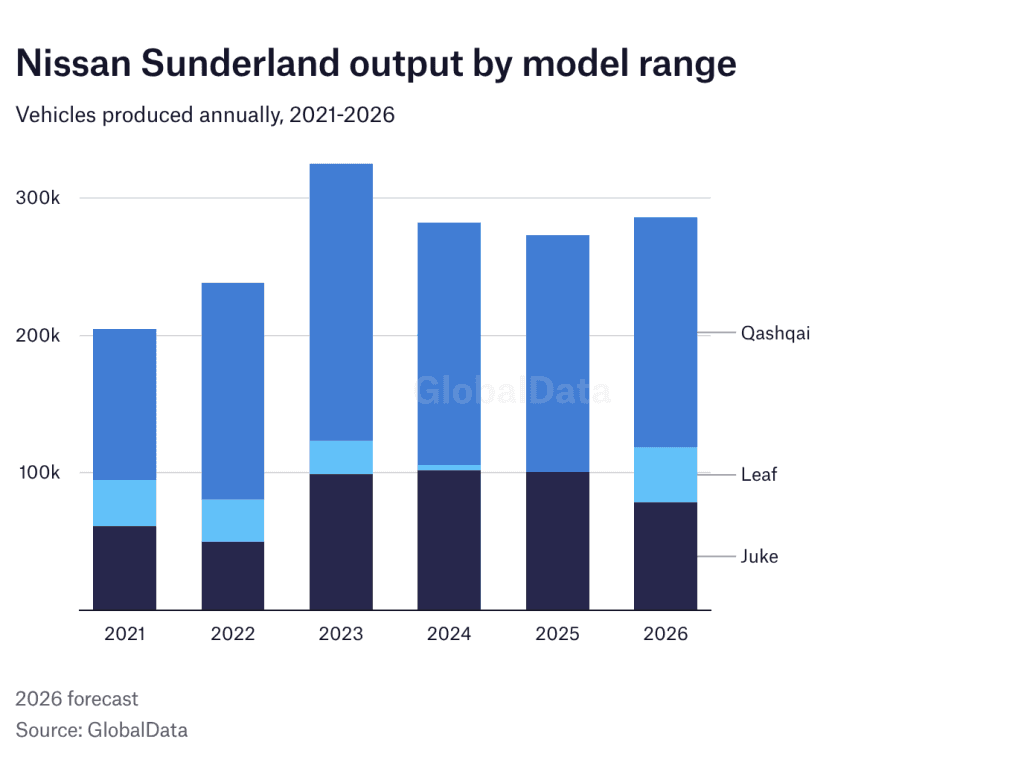
Nissan's Sunderland facility is not just another car factory. It is the largest car plant in the United Kingdom and, crucially, Nissan's only remaining assembly plant in Europe. The factory employs around 6,000 workers directly, with tens of thousands more jobs in the wider supply chain depending on its continued operation. For the north-east of England — a region that has historically relied on heavy industry and manufacturing — the plant is a cornerstone of the local economy.
The Society of Motor Manufacturers and Traders (SMMT) has confirmed just how dominant the facility is at a national level. According to the trade body, the Sunderland plant produced more than 35% of all cars manufactured in Britain last year alone. That figure is remarkable and illustrates why any threat to its continued operation — or any opportunity to secure its future — commands immediate attention from policymakers.
Beyond the raw employment numbers and production statistics, Sunderland also serves as a symbol of the UK's broader industrial capacity. Keeping Nissan committed to the site is therefore not just an economic priority but a political and strategic one as well.
What the Support Package Could Include
While full details of any agreement remain under wraps, sources cited by Reuters indicate that the support package under discussion could take several forms. These are likely to include:
- Direct grants — one-off or phased financial contributions from the government to support investment in new models or production upgrades at the Sunderland site.
- Tax breaks — preferential tax treatment designed to make continued investment in the UK more attractive compared to other global locations Nissan might consider.
- Subsidies — ongoing financial support tied to specific production or employment commitments, potentially linked to the manufacture of electric or zero-emission vehicles.
Crucially, any financial support would not be unconditional. According to the report, the package would be contingent on Nissan making firm commitments to bring new vehicle models or model variants to the Sunderland plant and to safeguarding existing jobs at the site. This kind of conditionality is consistent with the UK government's broader approach to industrial policy, which has increasingly focused on securing tangible outcomes in exchange for public funding.
The EV Mandate Connection
The anticipated announcement from Nissan is expected to coincide with the UK government's planned changes to its zero-emission vehicle (ZEV) mandate — a regulatory framework that sets requirements for the proportion of electric vehicles that manufacturers must sell each year in the British market. Reports suggest the government is preparing to adjust the mandate, potentially offering manufacturers more flexibility in how they meet their targets.
This context is significant. For Nissan, which has been a pioneer in electric vehicle manufacturing with the Leaf — one of the world's best-selling EVs — and which assembles electric variants at Sunderland, any relaxation or recalibration of the ZEV mandate could influence its investment calculus. At the same time, the government's desire to align a Nissan commitment with its EV policy announcement suggests an attempt to frame the deal as part of a coherent industrial and green transition strategy, rather than simply a bailout of a legacy manufacturer.
The UK's automotive industry has been vocal about the pressures it faces from the EV transition, including high energy costs, competition from Chinese manufacturers, and the complexities of meeting strict emissions targets during a period when consumer demand for electric vehicles has not always kept pace with regulatory ambition. A flexible ZEV mandate, combined with targeted support for major manufacturers like Nissan, represents one approach to managing those tensions.
Broader Implications for UK Automotive Manufacturing
The Nissan talks are taking place against a backdrop of significant turbulence for the UK automotive sector. Several manufacturers have scaled back or restructured their British operations in recent years, and the industry has repeatedly called on the government to provide greater certainty around regulation, energy costs, and trade arrangements — particularly in the context of the UK's post-Brexit trading relationship with the European Union.
Securing a long-term commitment from Nissan would send a powerful signal to other manufacturers considering the future of their UK operations. It would demonstrate that the government is prepared to compete aggressively for automotive investment, using the full range of tools at its disposal. For a Labour government keen to demonstrate its industrial credentials, a successful deal with Nissan in a region like the north-east of England would carry considerable political weight as well.
Industry analysts have also noted that the Sunderland plant's future is closely tied to decisions about which electric vehicle platforms Nissan assigns to the site. If the company commits to manufacturing next-generation EV models in Sunderland, it would effectively anchor the plant's relevance deep into the 2030s and beyond, providing the long-term stability that workers, suppliers, and the wider community depend upon.
What Comes Next
With a formal announcement expected this summer, attention will now turn to the specifics of whatever agreement is reached. Key questions include which new models Nissan will commit to building at Sunderland, the scale and duration of any government financial support, and the precise employment guarantees that will be written into any deal.
For now, the advanced state of the talks is itself a positive indicator. Both sides appear to have a strong incentive to reach agreement — Nissan to secure public funding that reduces the cost of continued UK investment, and the government to protect jobs, demonstrate industrial seriousness, and align the announcement with its evolving EV policy. Whether the final package meets the ambitions of both parties remains to be seen, but the direction of travel is clear: the UK is fighting hard to keep Nissan — and its 6,000 Sunderland jobs — firmly on British soil.