
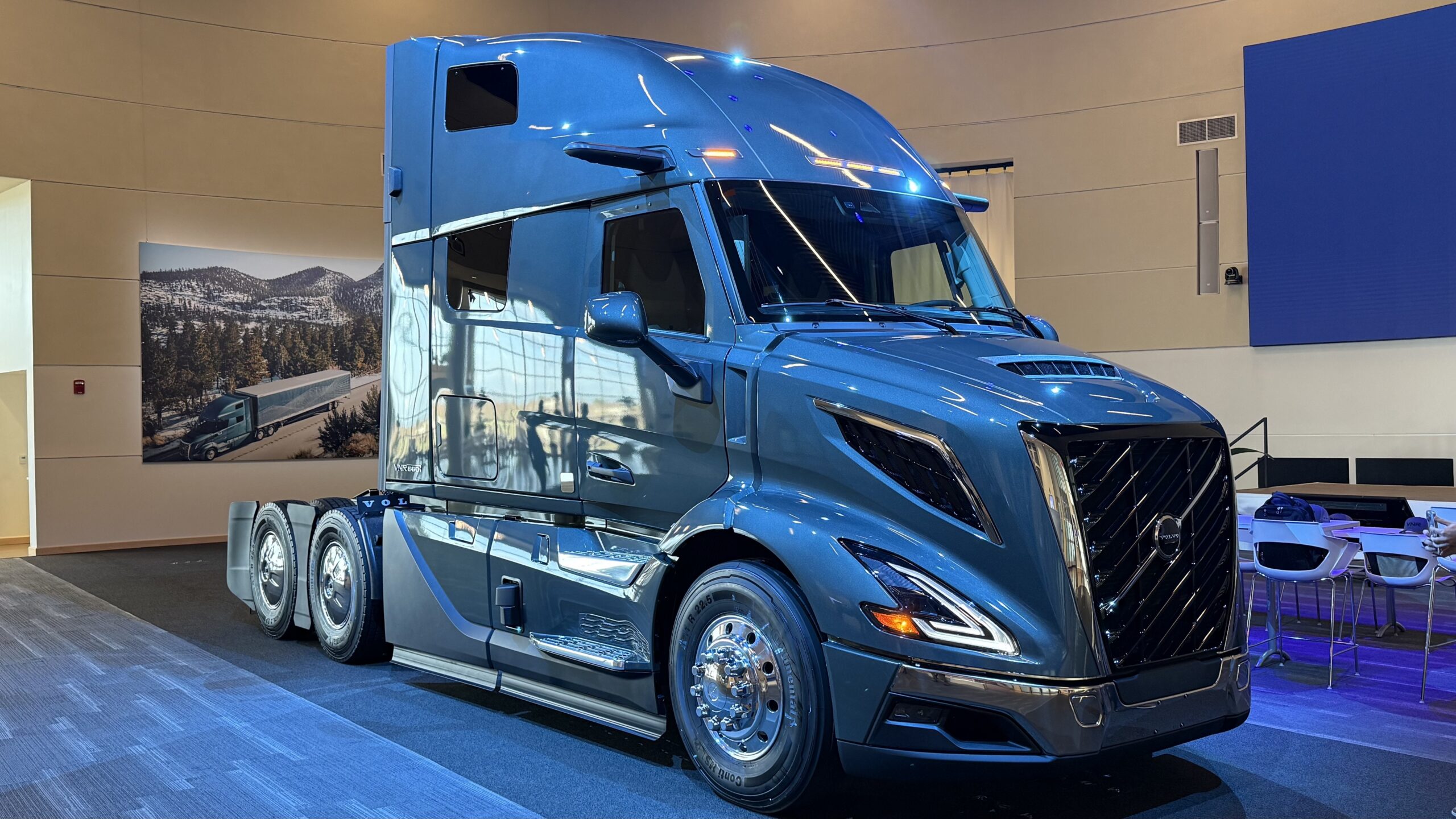
Volvo Trucks Is Changing How Fleets Handle Software Updates
For fleet managers, keeping dozens — or even hundreds — of trucks running on the latest software has long been one of those quietly painful operational challenges. It sounds simple in theory: push an update, done. But in practice, it means scheduling downtime, coordinating with drivers, and pulling trucks off the road during hours when they could be generating revenue. Volvo Trucks is now addressing that challenge head-on with a feature that could fundamentally change how fleets think about vehicle maintenance: unattended over-the-air (OTA) software updates.
Set to launch later this year, the new capability allows drivers to initiate a software update, turn off the truck, lock it, and simply walk away. The vehicle handles the rest on its own — completing the update quietly in the background while the driver is on a break, at home for the night, or otherwise off the clock. When the driver returns, the truck is updated and ready to go.
What Unattended OTA Updates Actually Mean for Fleets
On the surface, this might sound like a minor convenience feature. But in the trucking industry, where vehicles are often running eight to eleven hours a day, any time saved translates directly into operational efficiency and profitability. Unlike passenger cars — which have enjoyed OTA updates from manufacturers like Tesla for years — commercial trucks carry far more complex software ecosystems and operate under far more demanding schedules.
Peter Voorhoeve, president of Volvo Trucks North America, put it plainly: "We are always striving to maximize our customers' uptime, and this is an important milestone. Drivers will be able to start a software update, lock the truck and walk away, whether that's for a break or at the end of the day, and return to an updated vehicle. It's a simpler way for fleets to keep trucks current without interrupting operations."
That word — uptime — is everything in trucking. A truck that isn't moving isn't making money. Traditionally, software updates have required trucks to be stationary and attended, meaning drivers or technicians had to be present throughout the process. Multiply that across a large fleet, and the cumulative cost in lost productivity becomes significant.
Eight Years in the Making: The Evolution of Volvo Remote Programming
Volvo's unattended OTA update feature didn't appear overnight. It represents the latest step in an eight-year journey of developing and refining remote programming capabilities for its commercial vehicles. Understanding that evolution helps put the new feature in context.
In the early stages of Volvo's remote programming system, the process was far more cumbersome. Fleet managers or drivers had to manually call Volvo to request a specific software package. That package would then be sent to the truck, where the driver would need to actively install it. To make matters more complicated, those software packages came with 30-day expiration windows — meaning if the update wasn't installed in time, the whole process had to start over.
Madeline Sullivan of Volvo Trucks North America described the inherent problem with that approach: "It's not hard to call and ask for an update, but it's a very easy task to postpone." And postpone people did. For a single truck operator, this might be a manageable inconvenience. But for a fleet managing hundreds or thousands of vehicles, the administrative burden of tracking, requesting, and confirming software updates across the entire fleet becomes an operational headache — and a real risk for falling behind on critical software patches.
Over the years, Volvo has been working to remove each of those friction points one by one, moving from manual phone requests toward increasingly automated deployment methods. The unattended update feature is the culmination of that effort.
How the Feature Works in Practice
The operational simplicity is one of the most compelling aspects of this new capability. Here is how a typical update scenario might unfold under the new system:
- A driver receives a notification that a software update is available for their vehicle.
- Before heading home at the end of a shift, the driver initiates the update through the truck's interface.
- The driver powers down the truck, locks it, and leaves — just as they normally would.
- The truck completes the software update automatically while unattended.
- When the driver returns the next morning, the vehicle is fully updated and ready for the road.
No waiting around. No scheduling a technician. No pulling the truck out of rotation during peak hours. The update happens during time that would have otherwise been idle anyway.
Why This Matters for the Broader Trucking Industry
Volvo's move reflects a broader trend across the commercial vehicle industry: the growing importance of software in vehicle performance, safety, and compliance. Modern trucks are increasingly software-defined, meaning their capabilities — from fuel efficiency algorithms to advanced driver assistance systems — can be improved or adjusted through software changes. Keeping that software current is no longer optional; it is a competitive and regulatory necessity.
Fleet operators who fall behind on software updates may find themselves dealing with reduced performance, missed safety improvements, or even compliance gaps. The ability to deploy updates seamlessly, without interrupting operations, removes one of the key barriers to staying current.
Voorhoeve underscored this point: "Any time saved directly translates into increased productivity for our customers." In an industry where margins are often thin and efficiency is everything, that kind of statement carries real weight.
A Smarter Future for Fleet Software Management
Volvo Trucks' unattended OTA update capability is more than a convenience feature — it is a strategic shift in how commercial vehicle software maintenance is approached. By turning idle, parked time into productive update time, Volvo is helping fleets maximize the value of every hour their trucks are not on the road. As the trucking industry continues to embrace connectivity and software-driven performance, features like this will move from being differentiators to industry standards. For now, Volvo is positioning itself at the leading edge of that transition, offering fleets a smarter, simpler, and more efficient path to keeping their vehicles up to date.
With the feature set to roll out later this year, fleet managers and operators would do well to pay close attention. The era of unattended, automated truck software updates has arrived — and it promises to make the already complex job of managing a modern fleet just a little bit easier.